How Real-Time Route Optimization Improves On-Time Delivery Rates

Introduction
Every transport company wants the same thing. A delivery that leaves on time, moves without delays, and reaches the customer at the promised hour. Achieving this consistency helps boost customer satisfaction and overall profit. But real operations are not that smooth. Traffic changes without warning. The weather slows down roads. A vehicle breakdown can push back the entire schedule. Small delays pile up and turn into bigger losses.
This is why real time route optimization has become one of the most important tools in modern logistics. It allows a fleet to react to what is happening on the road right now, not what was planned on paper earlier in the day. With the right mix of live data, automation, and route intelligence, companies can raise their on-time delivery rates and cut wasted time inside daily operations.
Below is a complete breakdown of how it works, why it matters, and how a smart TMS for trucking company operations creates real improvements that show up in the numbers.
What Real Time Route Optimization Actually Means
Real time route optimization is more than a digital map. It is a live planning system that studies current road conditions and then guides each vehicle toward the most efficient path at that moment. It refreshes constantly and adjusts routes the moment something changes.
This process uses:
• Traffic flow data
• Congestion patterns
• Weather alerts
• Road closures
• Driver location
• Delivery time windows
• Vehicle load and capacity
• Fuel efficiency patterns
A traditional map cannot adjust all this in seconds. A dispatcher cannot do it manually either. Smarter route optimization uses algorithms that process large amounts of data faster than any human can. The result is a steady stream of smarter routing decisions throughout the day.
Why Real Time Routing Matters in Transport
In trucking and last mile logistics, delays come from hundreds of small problems that appear throughout the day. Some examples include:
• A signal failure that creates a long jam
• Rain that slows down a highway
• A school zone slows down movement during certain hours
• A road accident that blocks a lane
• A busy market area during peak hours
• A driver taking a long, unplanned route
When a company uses real time routing, these disruptions are spotted early and corrected immediately. Instead of a vehicle sitting idle in traffic, the system finds a faster alternate route. Instead of waiting until a delay becomes unmanageable, the fleet manager gets a real-time alert and can make decisions on the spot.
This is how companies protect their delivery schedules and keep operations smooth.
The Impact on On-Time Delivery Rates
When a transport company shifts from manual route planning to smart transport dispatch software, the difference becomes clear within weeks. Even small improvements in daily routing add up over time. The biggest gains usually come in these areas:
1. More Accurate Delivery Windows
Customers expect accurate ETAs. Real-time routing updates ETA predictions based on every live change on the route. This builds confidence because the customer receives information that reflects the real situation, not a guess made hours ago.
2. Shorter Total Delivery Time
Optimized routes cut out unnecessary turns, slow roads, and wasted miles. Trucks spend more time moving and less time waiting. In many fleets, this alone reduces daily delivery time by a large margin.
3. Fewer Missed Slots
In B2B transport, many clients have strict receiving windows. If a vehicle misses the slot, it either waits for hours or returns the next day. Real-time routing helps drivers reach within the exact slot required.smarter route optimization
4. More Deliveries Completed Per Shift
When trucks run on optimized routes, the number of successful deliveries per vehicle goes up. It becomes possible to complete more trips in the same number of working hours.
Cost Savings Created by Real-Time Routing
Better routing not only improves speed. It cuts costs across the entire transport cycle. The improvements usually appear in these areas:
Fuel Costs
Fuel burn increases when vehicles idle, stop often, or take longer paths. Smarter routing reduces unnecessary kilometres and avoids slow zones. Even a 10 percent cut in fuel usage saves a large amount across a full fleet.
Maintenance Costs
Lower idle time and shorter paths reduce stress on the engine, tyres, brakes, and suspension. Trucks remain in better condition and require fewer repairs.
Driver Hours
Better routing means drivers spend fewer hours stuck on slow roads. This reduces overtime and improves driver satisfaction.
Back Office Costs
Dispatchers spend less time manually correcting schedules. A transport management system handles most of the heavy work and reduces human error.
How Real-Time Route Optimization Works Inside a TMS
A well-designed TMS for trucking company operations follows a clear flow:
Step 1: Collect Data
The system pulls information from GPS devices, sensors, maps, weather channels, and driver inputs.
Step 2: Analyse the Situation
The TMS checks traffic speed, estimated delays, load limits, customer requirements, and time windows.
Step 3: Build the Best Route
The system calculates the shortest, fastest path based on current conditions, not those from earlier in the day.
Step 4: Adjust When Needed
If something changes, the TMS rechecks the route and suggests a new one. Drivers receive updates instantly.
Step 5: Track and Report
The software tracks each movement, logs performance, and creates reports that help managers improve planning for future operations.
Why Modern Transport Companies Cannot Depend on Manual Planning
There was a time when drivers relied on personal knowledge, and dispatchers relied on experience. Today, the transport environment is too dynamic for that. Roads are crowded. Delivery windows are tighter. Customer expectations are higher. On top of this, fuel costs and competition continue to rise.
Manual planning often fails because:
• It relies on static information
• It cannot update routes mid-trip
• It takes too long to plan multi-stop trips
• It does not know sudden disruptions
• It cannot predict congestion
• It becomes complicated as the fleet grows
Real time routing removes this pressure from human planners and gives them a tool that manages complexity automatically.
How Smarter Route Optimization Helps Mobility Infotech Logistics
For a company like Mobility Infotech Logistics, has several direct advantages:
• Higher on-time delivery performance
• More predictable operations
• Lower cost per delivery
• Better driver planning
• Improved customer experience
• Faster scaling without extra staff
• Stronger trust with clients
When routing becomes intelligent, the entire transport chain becomes smoother.
Final Thoughts
Smarter route optimization is not a trend. It is a necessity for any trucking or logistics company that wants to run a reliable business. It cuts delays, improves delivery accuracy, lowers fuel waste, and strengthens customer trust. Most importantly, it gives transport managers a clear view of their fleet and allows them to make decisions based on real situations, not assumptions.
A modern TMS with live routing is now one of the most important tools a logistics business can invest in. It builds stability, efficiency, and long-term growth across the entire operation.
Get in touch with our battle-tested sustainability, technology, and TMS specialists to explore tailored green logistics solutions.

You might also like
 Written by Jane Austen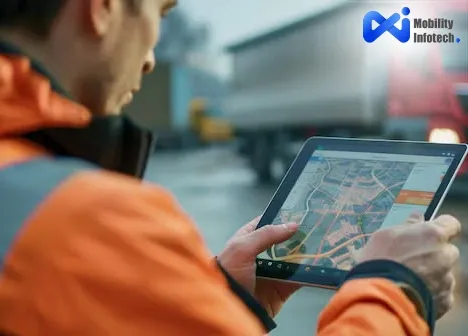
 Written by Michael S.
 Written by David Williams