
How Final Mile Tracking Software Improves Customer Satisfaction

Introduction
Here is an uncomfortable truth about delivery. The part of the journey your customer remembers is the part you have historically had the least control over.
Marketing controls the storefront. Merchandising controls the product. Then a parcel leaves a warehouse and, for the next two days, the brand experience is a driver, a van and a status page that says the shipment is in transit. Every operator learns eventually that satisfaction is decided in that window, and that delivery route planning software has more influence over customer sentiment than most customer experience budgets do.
The scale involved is worth stating plainly. The US Census Bureau reported that total US retail ecommerce sales reached $1,233.7 billion in 2025, accounting for 16.4 percent of all retail sales. That is a very large number of post purchase experiences, most of which are decided by operational execution rather than brand promise.
The five moments where satisfaction is actually won or lost
1. The promise at checkout
Customers do not want the fastest possible option nearly as often as the industry assumes. The Capgemini Research Institute's last mile study, published in January 2019 from a survey of 2,874 consumers and 500 executives, found that 73 percent of consumers valued having convenient delivery time slots more highly than receiving deliveries quickly.
That finding still holds up in most US operations we see. A reliable Thursday afternoon slot beats a vague promise of tomorrow. The catch is that you cannot offer a narrow window unless your planning can honour it, which is why the promise made at checkout should be generated by the same delivery route planning software that builds the route.
2. The first status update
Silence after purchase is the most common driver of support contacts. A customer who does not know what is happening will look for someone to ask, and every one of those contacts costs money while adding nothing.
The fix is unglamorous. Tell them early, tell them specifically, and update them when something changes. A delivery route planner that publishes a dispatch time and a projected window as soon as the route is built removes most of that early uncertainty on its own.
3. The day of delivery window
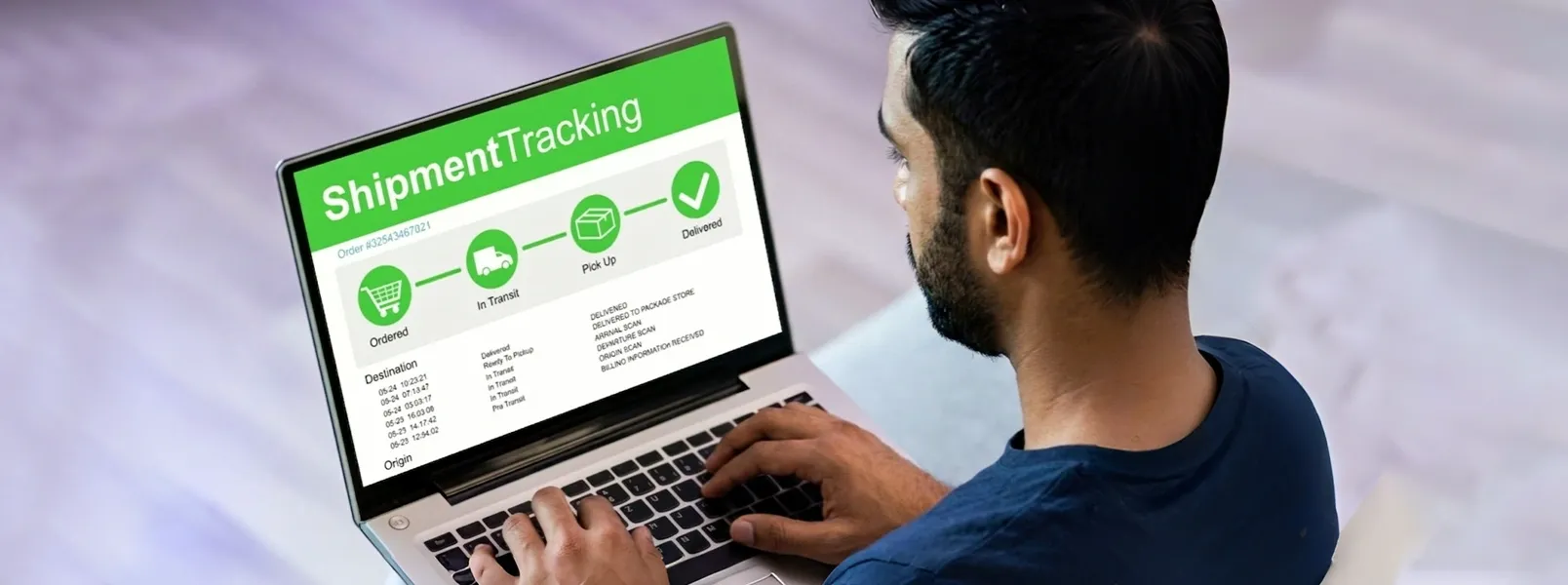
This is where tracking either builds confidence or destroys it. A tracking page that shows a live position and an ETA that updates as the day progresses is genuinely useful. A page that has said out for delivery since 7 in the morning is a countdown timer for frustration.
The difference is not a design choice. It comes from whether the ETA is generated by a live delivery route optimization software engine or by a static estimate created before the vehicle left the depot.
4. The doorstep
Proof of delivery capture matters here more than most teams credit, and delivery route optimization software that sequences realistically gives drivers the time to do it properly rather than rushing the last twenty stops. A photo of where the parcel was left prevents the entire category of conversations that begin with a customer insisting nothing arrived. It protects the driver, resolves disputes in seconds and removes a stubborn source of dissatisfaction.
5. The recovery
Deliveries fail. Loqate's Fixing Failed Deliveries research, published in March 2021 from a December 2020 survey of 304 retail executives, found that nearly a quarter of organisations had more than one in ten orders fail on the first attempt. What separates operators is not the failure rate alone. It is how fast the recovery happens. A confirmed new window offered within the hour changes the outcome. A door tag and silence does not.
Why tracking quality depends on routing quality
Operators often try to buy their way out of this with a better tracking page. It rarely works, because tracking is a display layer. What it displays comes from the plan underneath.
If the plan is static, the tracking page reports a prediction that is already stale. If the plan is live, the page reports something true. A good delivery route planner recalculates arrival estimates continuously against actual service times, current traffic and driver progress, then feeds those revised numbers straight into customer notifications. That is why serious tracking projects almost always turn into routing projects once the first review meeting happens.
There is a commercial dimension too. The same Capgemini study found that organisations were recovering only around 80 percent of their delivery costs from customers, and that 97 percent of organisations believed their existing last mile models were not sustainable at full scale. Free or subsidised delivery only works if the underlying operation is efficient, which puts the routing engine at the centre of both satisfaction and margin.
What good final mile visibility includes
- Live vehicle position and continuously updated ETAs rather than fixed status codes.
- Proactive notification when an arrival window shifts, sent early enough to be useful.
- Self service rescheduling and delivery instructions before the driver arrives.
- Photo and signature proof of delivery captured at the door.
- Exception alerts that reach dispatch before they reach the customer.
- Analytics linking satisfaction outcomes back to specific routes, drivers and zones.
Why Mobility Infotech Logistics
Our platform was built so that tracking and routing are not two products pretending to be one.
The Mobility Infotech Logistics engine plans against more than 200 constraint parameters and re-optimizes live during the shift. The ETA a customer sees on a tracking link comes from that same engine, so what your customer is told and what your dispatcher is managing never drift apart. Drivers work from a mobile application with sequencing, scan based confirmation and proof of delivery capture, which keeps the data behind every status update grounded in what actually happened.
A supply chain manager at EverGreen Pharma in the United Kingdom told us that our precise temperature logs, automated compliance reports and dependable carrier workflows became the backbone of their European distribution. The mechanism behind that reliability, a single data model across planning, execution and tracking, is the same one that keeps consumer delivery promises honest.
What makes us different
- One engine, one truth. Planning, execution and customer facing tracking share a data model, so ETAs are calculated rather than estimated.
- Coverage across the full journey. First mile, mid mile, last mile, warehouse management and shipment tracking sit on one platform.
- Configurable by your team. Low code tools let operations adjust windows, service times and notification rules without a development cycle.
- Enterprise ready. ISO certifications, GDPR compliance and support for more than 600 brands, delivered from offices in the United States, India, Taiwan and Italy.

Satisfaction is an operations metric
Customers do not evaluate your delivery experience against your competitors. They evaluate it against the last delivery they received from anyone, which is why expectations keep rising regardless of what your category does.
Meeting them is less about promising speed and more about keeping the promise you made. That comes down to planning accuracy, live updates and fast recovery when something goes wrong, all of which start with the delivery route planning software underneath your operation rather than the tracking page on top of it. If you want to see what your current post purchase experience looks like from the outside, Mobility Infotech Logistics will map it against your own delivery data and show you where satisfaction is actually being lost.
- content
- Introduction
- The five moments where satisfaction is a...
- Why tracking quality depends on routing ...
- Why Mobility Infotech Logistics
- Satisfaction is an operations metric
Get in touch with our battle-tested sustainability, technology, and TMS specialists to explore tailored green logistics solutions.

You might also like
 Written by Jane Austen
 Written by Michael S.
 Written by David Williams