
Top Challenges Logistics Companies Face Without Route Optimization Software

Introduction
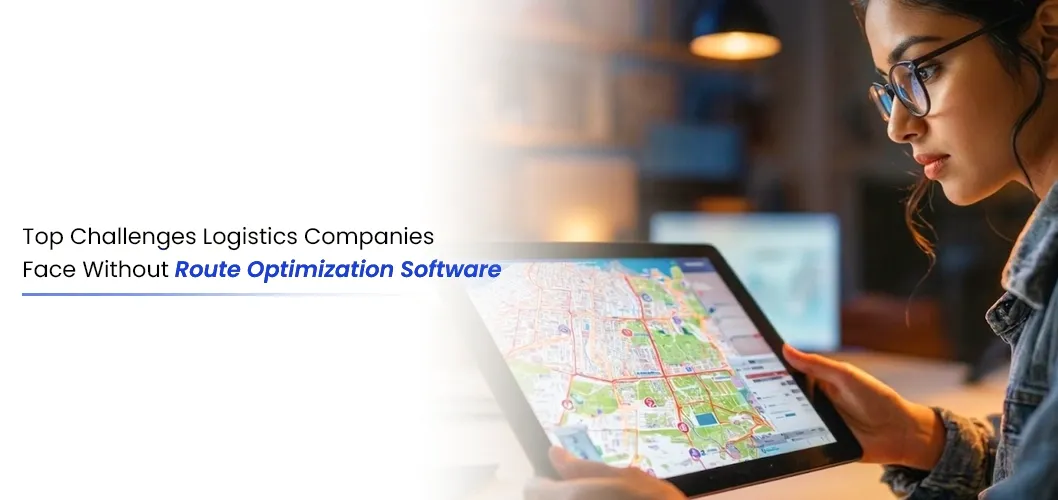
Some logistics problems look small on paper. A few extra miles. A late truck. One missed stop. One irritated customer. Then the math hits. Hard. These everyday challenges may seem minor at first, but in the U.S., trucking moved roughly 72.7% of the nation’s freight by weight in 2024, and the industry handled an estimated $906 billion in freight revenue. When routing is still managed with static plans, whiteboards, or spreadsheet guesswork, tiny mistakes don’t stay tiny for long. They multiply across every route, every driver, every day.
Manual Route Planning
Here’s the part many companies underestimate. Routing is not just the dispatch admin. It is cost control, service control, labor control, and customer experience control rolled into one. Without route optimization software, fleets often build routes based on habit instead of live variables such as traffic, stop density, customer windows, vehicle capacity, and driver availability. That feels manageable until operations start leaking margin from ten different corners at once.
Fuel, labor, and equipment costs
In 2024, the average cost of operating a truck hit $2.260 per mile, according to ATRI. Strip out fuel, and non-fuel marginal costs still climbed to a record $1.779 per mile. Truck and trailer payments rose 8.3% to $0.390 per mile, while driver benefits rose 4.8% to $0.197 per mile. So yes, routing mistakes are expensive. Not theoretically. Right now. In cash. American Transportation Research Institute
Congestion into an even weaker business model
Traffic is brutal, and static routing makes it worse. INRIX reported that the typical U.S. driver lost 43 hours to congestion in 2024, costing about $771 in time, while total congestion costs topped $74 billion nationwide. If your routes are not dynamically adjusted, your fleet is basically volunteering to sit in that mess, burn fuel in it, and miss promised ETAs because of it. INRIX
Last-Mile Operations Become Chaotic
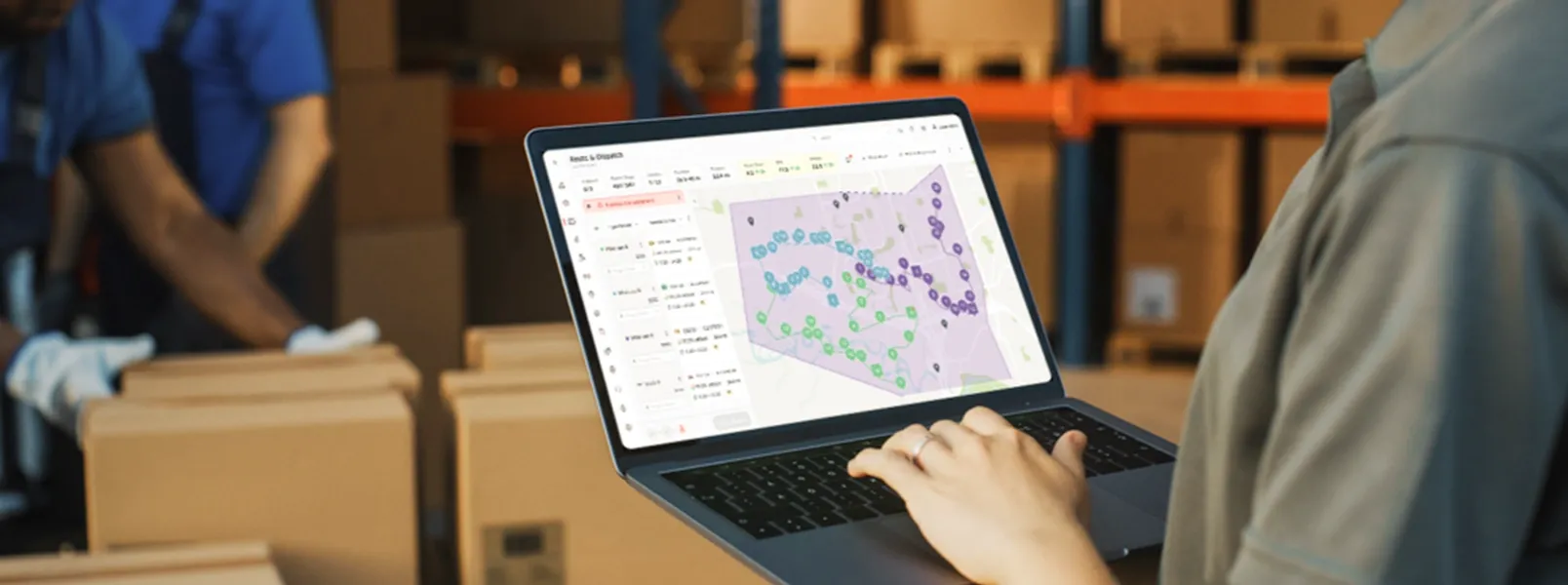
The last mile is where reputation gets made or wrecked. Customers do not care that the warehouse picked perfectly if the delivery arrives late, gets rescheduled, or shows up in a vague six-hour window that eats their whole afternoon. Without logistics route optimization, dispatchers spend more time firefighting than planning, and drivers are left to improvise in neighborhoods, apartment clusters, business parks, and delivery zones that all behave differently.
The final stretch of delivery
Ryder, citing FarEye, notes that last-mile delivery now accounts for 53% of overall shipping and delivery costs on average, up from 41% in 2018. That jump says a lot. The final mile is structurally messy, and when routes are inefficient, the mess gets expensive fast. More backtracking. More idle time. More failed attempts. More overtime. More vehicles needed to move the same volume. Ryder
Failed deliveries and repeat trips
Every failed delivery creates a second problem, not just a first one. There is the redelivery cost, the customer service call, the driver time, the schedule disruption, and the ugly internal scramble that follows. Ryder highlights a Statista finding that failed deliveries cost U.S. businesses an average of $17.20 each. That number adds up fast when route quality is poor and customer communication is inconsistent. Ryder
Customer Experience
People in the U.S. are used to visibility now. They want updates. They want accurate ETAs. They want to know whether the truck is ten minutes away or still stuck three neighborhoods over. Without route optimization tools, that kind of transparency gets shaky because the underlying schedule itself is shaky. You cannot communicate confidently when the route was shaky from the beginning.
Customers want tracking, updates, and honesty, not routing excuses
DispatchTrack reports that 90% of consumers want to be able to track their orders, 80% want delivery status updates, and more than 60% would consider switching retailers if that visibility is missing. Half of consumers blame negative delivery experiences on poor communication, and one in three could not track their most recent delivery. That is not a small annoyance. That is a loyalty problem. DispatchTrack
Bad routing creates the kind of silence customers interpret as incompetence
This is where things get painfully human. A customer does not see an overloaded dispatcher or a poorly sequenced stop list. They see uncertainty. They see a late text. They see a promised window slide. They see a brand that looks disorganized. In my opinion, this is why route optimization software is no longer a luxury category. It is an expectation layer. Without it, even good companies can look sloppy.
Dispatch Teams Get Stuck Managing Exceptions
A lot of logistics businesses still rely on tribal knowledge. One dispatcher knows the best order of stops. One veteran driver knows which retail dock is always backed up after 2 p.m. One office manager remembers which customer needs a call before arrival. Useful? Sure. Scalable? Not even close. That kind of system breaks when the second volume spikes, staff changes, or service areas expand.
The U.S. trucking market is massive
As of June 2026, there were almost 580,000 active U.S. motor carriers registered with FMCSA that own or lease at least one tractor. ATA says 91.5% of those carriers operate 10 or fewer trucks, and 99.3% operate 100 or fewer. Small and mid-sized fleets dominate the market, which means operational discipline matters even more. They cannot afford wasted miles dressed up as routine. American Trucking Associations
Empty miles, poor stop sequencing
ATRI found that empty miles rose to an average of 16.7% in 2024. Think about that for a second. Nearly one-sixth of the movement has no revenue attached. Without logistics route optimization, companies often stack avoidable inefficiencies on top of unavoidable ones. The result is ugly: dispatcher fatigue, driver frustration, weaker route density, and a back office that spends its day patching holes instead of improving performance. American Transportation Research Institute
Data Visibility Stays Broken
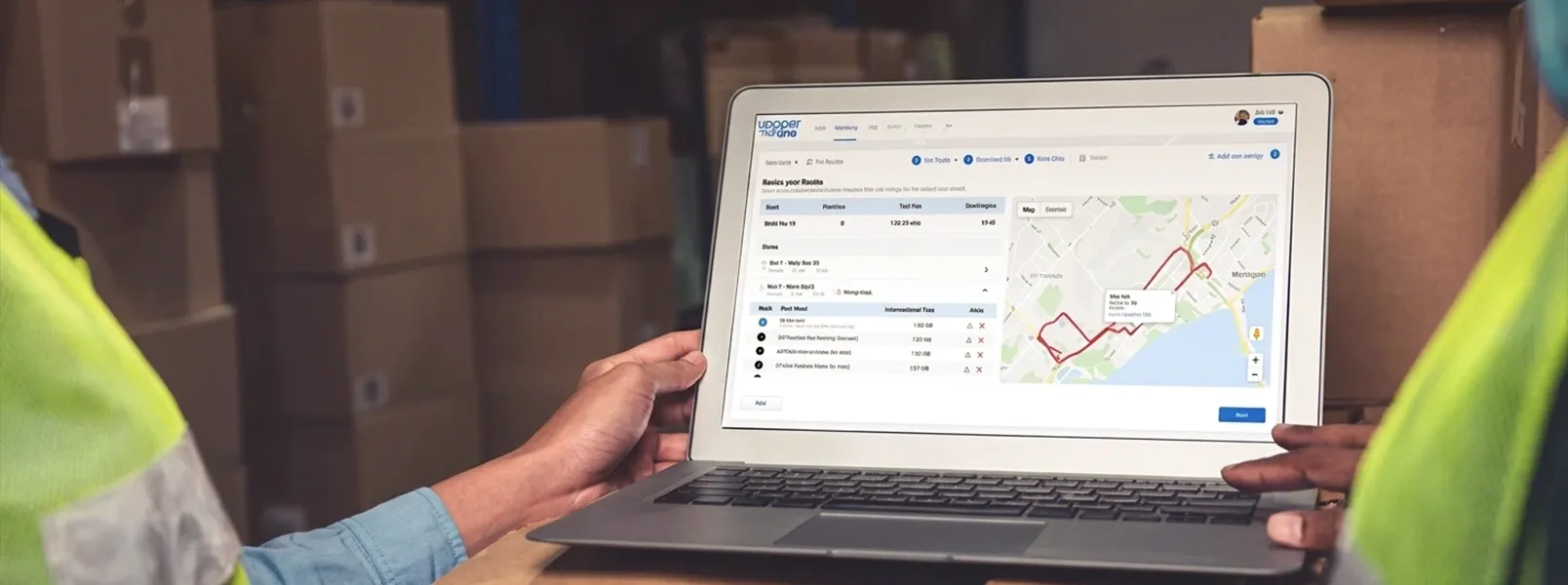
You cannot improve what you cannot see. That old line still hits because it is still true. Without modern routing systems, companies struggle to compare planned versus actual route times, track service compliance by zone, predict ETA accuracy, or identify where capacity is being wasted. The operation keeps moving, sure, but it moves in a fog. And fog is expensive.
Smarter routing gives logistics teams control
The real promise of route optimization tools is not just faster routing. It is a better decision quality. Better territory design. Better delivery windows. Better capacity balancing. Better exception handling. Better communication. Better post-route analysis. At Mobility Infotech Logistics, that is the bigger story: helping fleets move from reactive dispatch habits to repeatable, data-driven execution that actually scales in the U.S. market.
Why This Matters Right Now
American logistics is not getting simpler. Customer expectations are rising. Urban congestion is stubborn. Cost per mile is real. Last-mile pressure is intense. And smaller carriers still make up the backbone of the market. So the question is not whether routing complexity exists. Of course it does. The real question is this: Are you solving it with instinct alone, or with systems built for speed, precision, and constant change?
For brands trying to grow without bloating costs, route optimization software is one of the clearest operational upgrades on the table. It reduces waste, protects margins, sharpens service, and gives teams the confidence to promise more because they can actually deliver more. That is the kind of edge Mobility Infotech Logistics should be talking about, clearly, confidently, and with proof.
- content
- Introduction
- Manual Route Planning
- Last-Mile Operations Become Chaotic
- Dispatch Teams Get Stuck Managing Except...
- Data Visibility Stays Broken
Get in touch with our battle-tested sustainability, technology, and TMS specialists to explore tailored green logistics solutions.

You might also like
 Written by Jane Austen
 Written by Michael S.
 Written by David Williams