
Why Logistics Automation Software Is Replacing Manual Dispatch Operations in 2026

Introduction
Just before six in the morning, in a cross-dock outside Columbus, a dispatcher is drawing lines on a whiteboard. Twenty-two vehicles. Around 300 supplier pickups. One driver who called in sick at quarter past four. That whiteboard has run the operation for eleven years and it still works, more or less. What has changed is the price of every mistake it makes. Manual first mile logistics route planning used to be a rounding error on the profit and loss statement. In 2026 it is a line item that operators can actually measure, and once a cost becomes measurable, it usually gets replaced.
The arithmetic behind that shift is not subtle. The American Transportation Research Institute reported in its 2026 Analysis of the Operational Costs of Trucking that the industry average cost of operating a truck hit $2.336 per mile in 2025, a 3.4% increase and the highest per mile figure in the history of the report. Strip fuel out of the calculation and costs still climbed 4.2% to $1.854 per mile. Every avoidable mile carries a heavier price tag than it did two years ago.
The dispatch board was built for a smaller freight world
There is nothing wrong with the instincts of a veteran dispatcher. Those instincts were formed in an operation with fewer stops, looser appointment windows and shippers who were happy to take a delivery whenever the truck showed up. That world is gone. A regional carrier today juggles dock appointment times, driver hours of service, trailer capacity, tolls, seasonal volume spikes and customers who expect a text message when the driver is twenty minutes out.
A human brain can hold maybe five or six of those variables at once. A mid sized operation running 40 vehicles across 400 stops has millions of possible route combinations. Nobody is solving that on a whiteboard. They are producing something workable and moving on, which is a completely different thing from producing something efficient.
Three places manual dispatch quietly loses money
Sequencing built on memory
Dispatchers remember which supplier loads fast and which one always keeps a driver waiting. What they cannot do is recalculate the whole plan when a pickup gets cancelled at nine in the morning. So the truck runs the original sequence anyway, with a gap in it. ATRI found in its 2025 update that empty miles averaged 16.7% across the carriers it surveyed in 2024, with an average of only 0.93 drivers per truck. That is a lot of movement generating no revenue.
Compliance calculated after the shift
Federal Motor Carrier Safety Administration rules give property carrying drivers an 11 hour driving limit inside a 14 hour on duty window, a required 30 minute break after eight cumulative hours of driving, and weekly limits of 60 hours in seven days or 70 hours in eight. Since the electronic logging device mandate took full effect in December 2017, none of that is negotiable or invisible. Manual planning treats hours as something to check afterwards. Automated planning treats hours as a hard input before the route is ever assigned.
Cost categories that move faster than the plan
ATRI's 2026 report showed tolls up 13.2% and repair and maintenance up 8.6% in 2025. A route plan drawn at six in the morning cannot price a toll corridor against a slower free route. Software can, on every stop, every day.
What logistics automation actually replaces
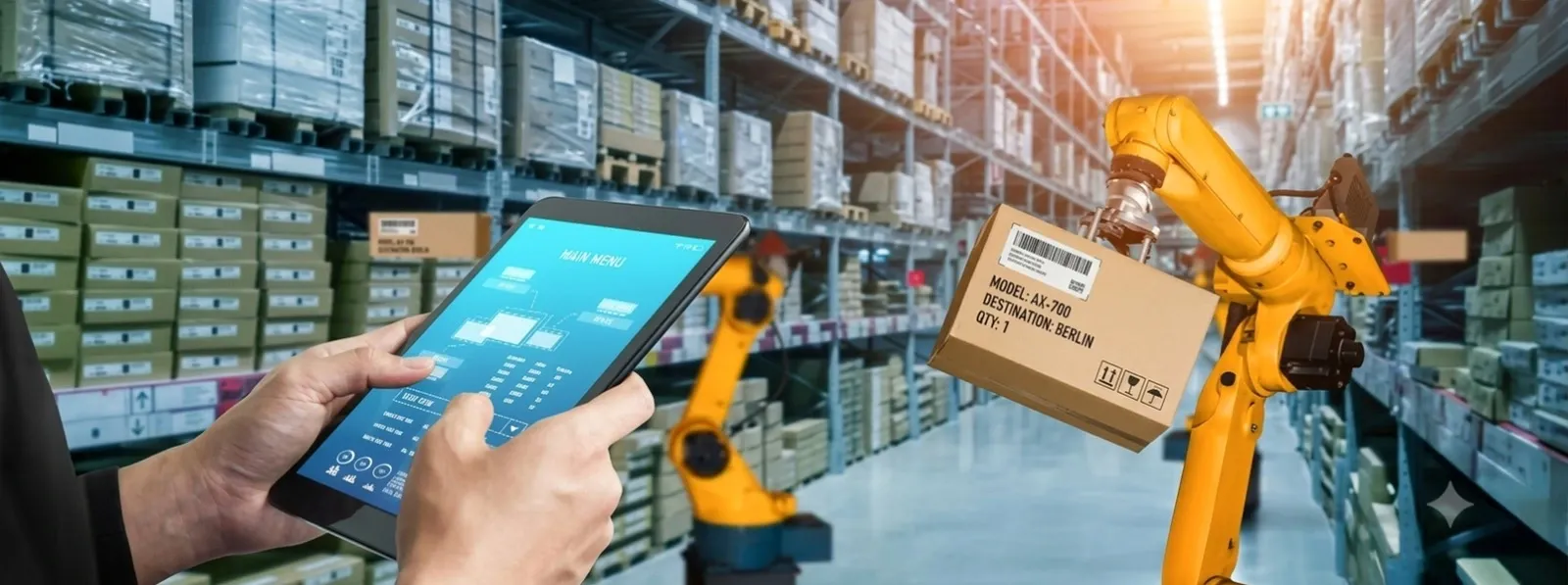
This is where a lot of vendors oversell and a lot of operators get nervous. Automation does not replace the dispatcher. It replaces the arithmetic the dispatcher was never meant to be doing.
The dispatcher still owns the judgement calls. Which customer gets the good driver. When to hold a load. Whether the new shipper is worth the aggravation. What the software owns is the constraint solving, the mid shift resequencing when a pickup falls through, and the exception alerts that surface a problem while there is still time to fix it. Route optimization for first mile delivery works on the same principle as any good operations tool. Give the machine the repetitive calculation and give the human the decision.
Why the first mile is where automation pays back fastest
Most operators start with the last mile because that is where the customer complaints come from. The bigger and quieter opportunity sits at the front of the network.
First mile pickups are volatile by nature, which is exactly why first mile logistics route planning breaks down first under manual methods. Supplier volumes change daily. Loads are not confirmed until the driver arrives. Consolidation decisions made at the pickup point determine how efficiently everything downstream runs. Get the first mile wrong and you are paying for that error three more times before the parcel reaches a doorstep.
First mile route optimization software addresses this by treating pickups as a live problem rather than a fixed schedule. Vehicle capacity, supplier readiness windows, driver hours and backhaul opportunities all get solved together. When a supplier calls to say the load will not be ready until two in the afternoon, the plan adjusts around it instead of absorbing the delay. Applied consistently, route optimization for first mile delivery shortens dock-to-dock cycle times and reduces the number of half-empty trucks leaving origin points.
There is a workforce argument too. The Bureau of Labor Statistics projects roughly 237,600 annual openings for heavy and tractor-trailer truck drivers over the 2024 to 2034 decade, most of them replacing people who leave the occupation. Fleets are not going to hire their way out of inefficiency. They have to route their way out of it.
Why Mobility Infotech Logistics
Plenty of platforms can draw a route. Fewer can run a first mile operation that changes shape three times before lunch.
Mobility Infotech Logistics was built around that reality. The route engine evaluates more than 200 constraint parameters across thousands of orders and hundreds of drivers, which means the plan reflects vehicle type, service time, load weight, driver availability and appointment windows rather than distance alone. Our first mile module connects pickup scheduling directly to warehouse inbound operations, so a change at the supplier gate updates the dock plan rather than surprising it.
Integration is the other half of the story. First mile route optimization software that cannot talk to your ERP becomes another screen nobody opens. Mobility Infotech Logistics connects through REST APIs to SAP, Oracle, NetSuite and Microsoft Dynamics, alongside order management and warehouse systems, so planning data flows both ways without a manual export.
What sets the Mobility Infotech Logistics platform apart
Three things come up repeatedly when operators compare us against the alternatives.
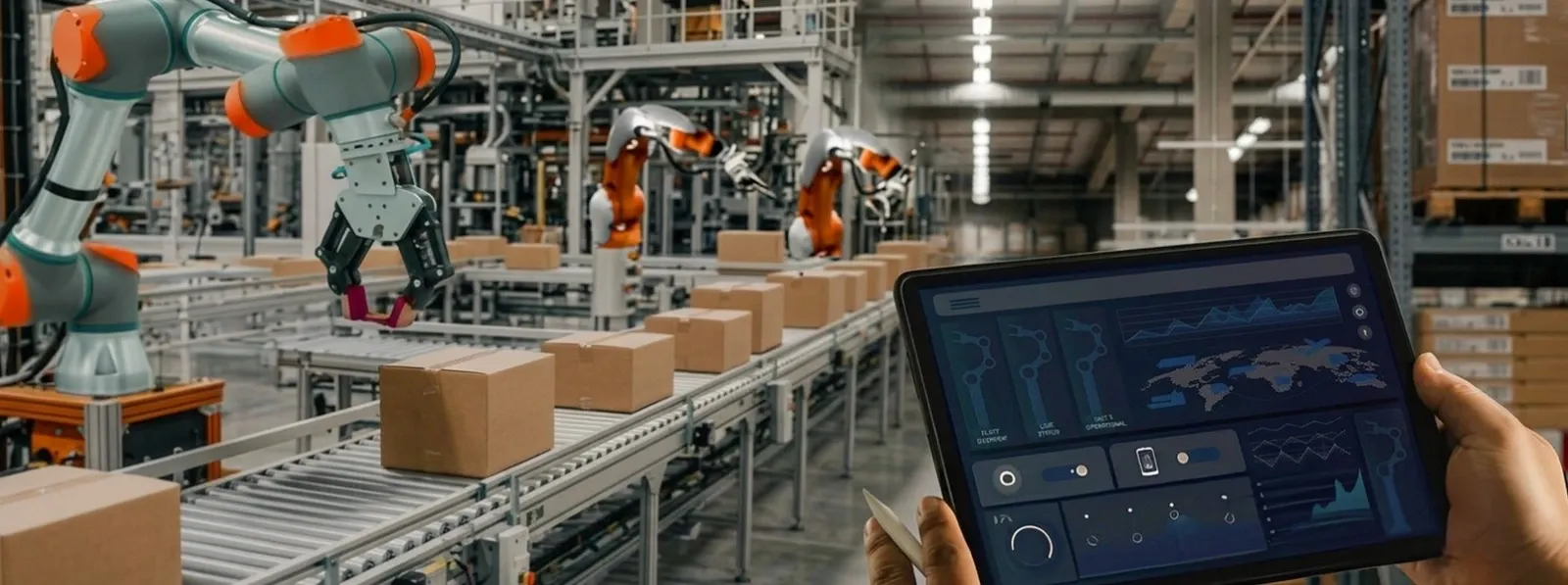
- Depth of constraint handling. Most tools optimize distance. We optimize against operational reality, including the constraints that dispatchers currently hold in their heads.
- Coverage across the full movement. First mile, mid mile, last mile, warehouse management and shipment tracking sit on one platform, which removes the handoff gaps where visibility usually disappears.
- Low-code configuration. Operations teams can adjust rules, service times and territories without waiting on a development cycle, which matters when your network changes faster than your software vendor releases updates.
We hold ISO certifications and GDPR compliance, and we support more than 600 brands from offices in the United States, India, Taiwan and Italy. That combination of enterprise governance and hands-on configurability is difficult to find in a single vendor.
The whiteboard is not coming back
Manual dispatch did not fail. It got outgrown. Freight volumes rose, appointment windows tightened, operating costs climbed and the tolerance for a plan that is merely workable disappeared. Automated first mile logistics route planning is now the baseline expectation for any carrier that wants predictable margins in a market this tight.
The operators pulling ahead in 2026 are not the ones with the biggest fleets. They are the ones whose plans update as fast as their operations change. If you are ready to see what that looks like against your own volumes and constraints, the team at Mobility Infotech Logistics can walk you through it with your data rather than a generic demo.
Get in touch with our battle-tested sustainability, technology, and TMS specialists to explore tailored green logistics solutions.

You might also like
 Written by Jane Austen
 Written by Michael S.
 Written by David Williams