
How Last Mile Routing Software Reduces Failed Deliveries and Improves ETA Accuracy

Introduction
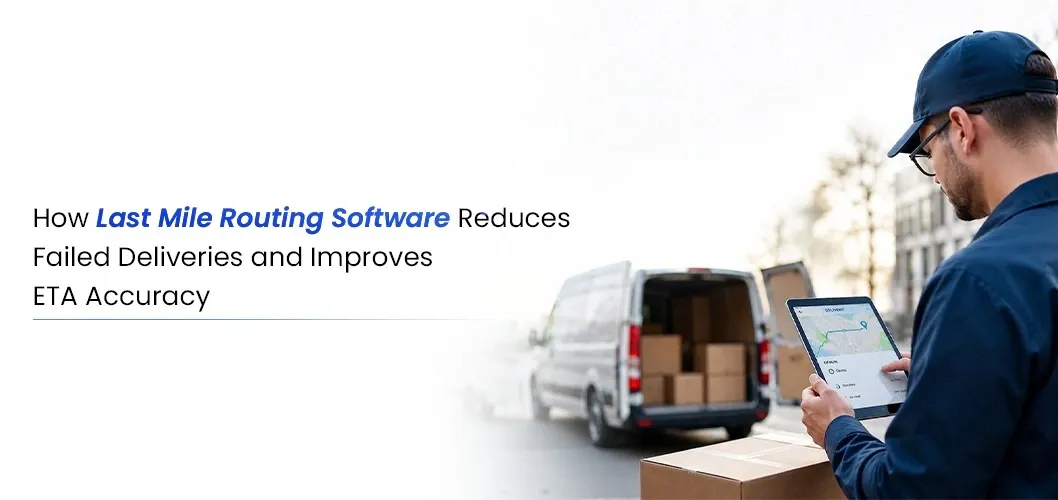
A package leaves the depot at 7 in the morning with a four hour window attached to it. By 11 the driver is running behind because two stops took longer than planned. The customer, who waited until half past ten and then left for work, gets a door tag. The parcel goes back to the depot, gets rescheduled, and the whole cost of that delivery doubles for zero additional revenue.
Multiply that by a few hundred a week and you have the quiet margin leak that most delivery operations have learned to live with. Real-time delivery route optimization exists specifically to close it, and the numbers behind the problem explain why the category has grown so quickly in the United States.
The cost of a failed attempt is worse than most teams assume
Loqate's Fixing Failed Deliveries study, published in March 2021 from a survey of 304 retail executives conducted in December 2020, found that 8% of domestic first time deliveries in the United States failed, at an average cost of $17.20 per failed order. For the businesses surveyed, that worked out to roughly $197,730 a year. Nearly a quarter of the organisations in the study reported that more than one in ten orders failed on the first attempt.
Then there is the customer side. The Capgemini Research Institute's last mile study, published in January 2019 from a survey of 2,874 consumers and 500 executives, found that 55% of consumers would switch to a competitor offering faster delivery. A failed attempt is not a neutral event. It is a churn trigger with a cost attached.Why deliveries fail in the first place
Why deliveries fail in the first place
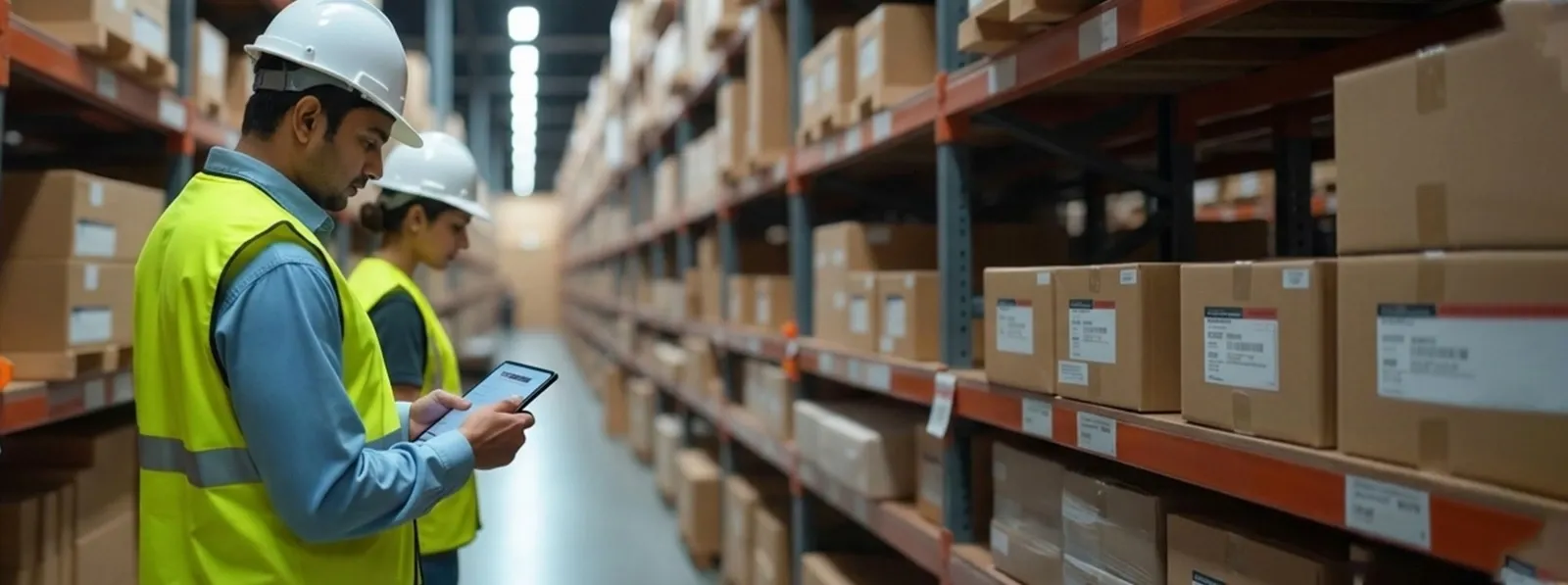
Failed deliveries look like random bad luck from the outside. From inside an operation they cluster into four repeatable causes.
- The recipient was not there because the promised window was too wide to plan a day around.
- The ETA drifted so far during the shift that the notification the customer received was useless.
- The address or access instruction was incomplete and the driver had no way to resolve it at the door.
- The route was overloaded from the start, so the last twenty stops were always going to run late.
Three of those four are planning and communication problems, not driver problems. That is the important insight, because it means the fix is systemic rather than a matter of pushing drivers harder.
What real-time changes about routing
Static route planning makes one prediction at the start of the day and then hopes. Traffic, weather, dwell time at each stop and unplanned additions all push the actual day away from the plan, and by mid morning the ETAs being sent to customers are describing a route that no longer exists.
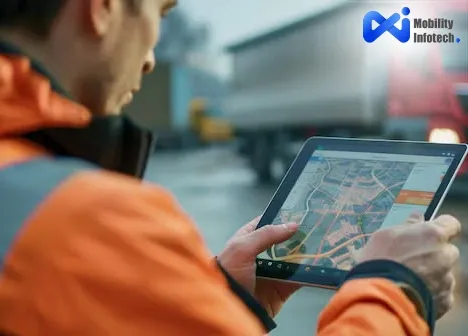
Real-time delivery route optimization works differently. The plan is recalculated continuously against live position data, actual service times and current road conditions. When a driver spends fourteen minutes at a stop that was budgeted for six, the downstream ETAs move immediately and the affected customers are notified while they can still do something about it. Modern delivery routing and scheduling software also reorders remaining stops when that produces a better outcome, rather than treating the original sequence as fixed.
The difference in customer experience is significant. A one hour window that holds is worth more than a two hour window that slips, and it converts directly into first attempt success.
The four levers that actually move first attempt rates
Narrow, honest promise windows
Wide windows exist because operations do not trust their own ETAs. Once arrival prediction is grounded in historical service times per location rather than an average, windows can tighten without increasing the risk of missing them.
Learned service times
Every stop has a real dwell time. An apartment complex with a slow elevator is not the same as a suburban driveway. Delivery routing and scheduling software that learns actual dwell time per address builds plans that survive contact with the street.
Proactive contact before arrival
A message thirty minutes out gives a customer a chance to be home or to redirect. A message after a failed attempt gives them a chance to complain.
Capacity discipline at the planning stage
Overloading a route to squeeze in extra stops does not add capacity. It relocates the failure to the end of the shift, where it costs the most to fix.
Where scheduling software earns its keep
Last mile routing and scheduling software is often bought for optimization and kept for exception management. The routes matter, but the real day to day value is in what happens when the plan breaks.
Good systems flag the break early. A driver falling behind by more than a defined threshold triggers a reassignment suggestion before three customers are affected instead of after. A stop that cannot be completed inside its window gets escalated rather than silently dropping to the end of the run. Over a quarter, that discipline shows up as a measurably higher first attempt rate and a lower cost per delivered parcel.
Proof of delivery capture matters here too. Photo and signature capture at the door removes the disputed delivery category entirely, which is a smaller cost than a failed attempt but a far more irritating one for customer service teams.
Why Mobility Infotech Logistics
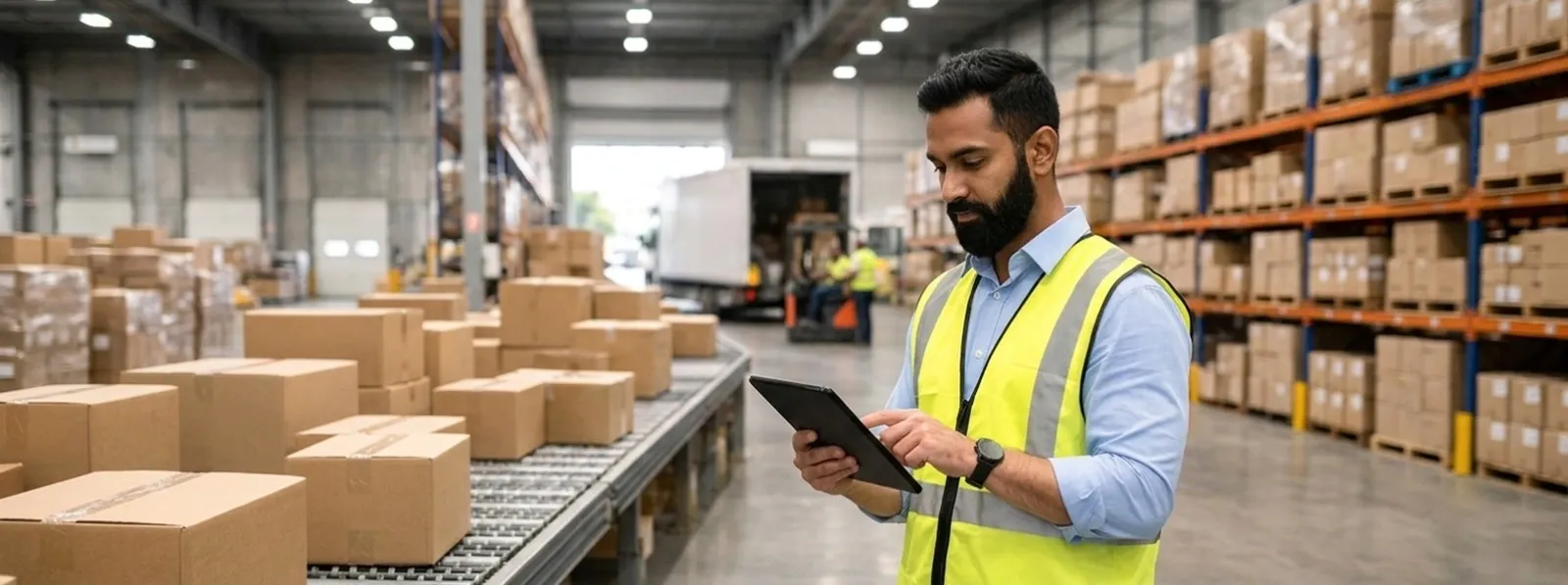
Our last-mile routing and scheduling software was built for operations where the plan changes after the first hour, because that describes almost every delivery network we work with.
The Mobility Infotech Logistics platform re-optimizes live against driver position, actual service time, and road conditions, then pushes revised ETAs to customers through tracking links without dispatch having to intervene. Drivers work from a mobile application with turn-by-turn sequencing, scan-based confirmation, and proof-of-delivery capture, so the data feeding the next day's plan comes from what actually happened rather than what was scheduled.
One of our customers, the head of operations at KiranaKart in India, reported that real-time ETAs and automated route re-optimization cut delivery delays by nearly 28%, with a sharp drop in customer complaints. The mechanics that produced that result translate directly to US density profiles.
What makes our approach different
- Optimization and tracking share one data model, so the ETA a customer sees is generated by the same engine that plans the route rather than a separate estimate bolted on afterwards.
- Exception handling is built into the dispatch view, with configurable thresholds that surface a slipping route while it can still be rescued.
- The platform covers first mile, mid mile and last mile together, which means a delay at the depot is visible in the delivery plan rather than discovered at the door.
- Integration through REST APIs into SAP, Oracle, NetSuite, Microsoft Dynamics and order management systems keeps address quality and customer contact data current, which removes one of the most common causes of failure.
Closing the gap between promise and arrival
Failed deliveries are rarely caused by one dramatic breakdown. They accumulate from wide windows, drifting ETAs, and plans that stopped reflecting reality by mid-morning. Real-time delivery route optimization attacks all three at once, which is why operators who adopt it tend to see first-attempt performance improve before anything else in the operation changes.
If your team is spending its afternoons rescuing routes instead of running them, that is a solvable problem. Mobility Infotech Logistics can model your current failure rate against an optimized plan and show you what the difference is worth over a year.
- content
- Introduction
- The cost of a failed attempt is worse th...
- Why deliveries fail in the first place
- The four levers that actually move first...
- Why Mobility Infotech Logistics
Get in touch with our battle-tested sustainability, technology, and TMS specialists to explore tailored green logistics solutions.

You might also like
 Written by Jane Austen
 Written by Michael S.
 Written by David Williams