
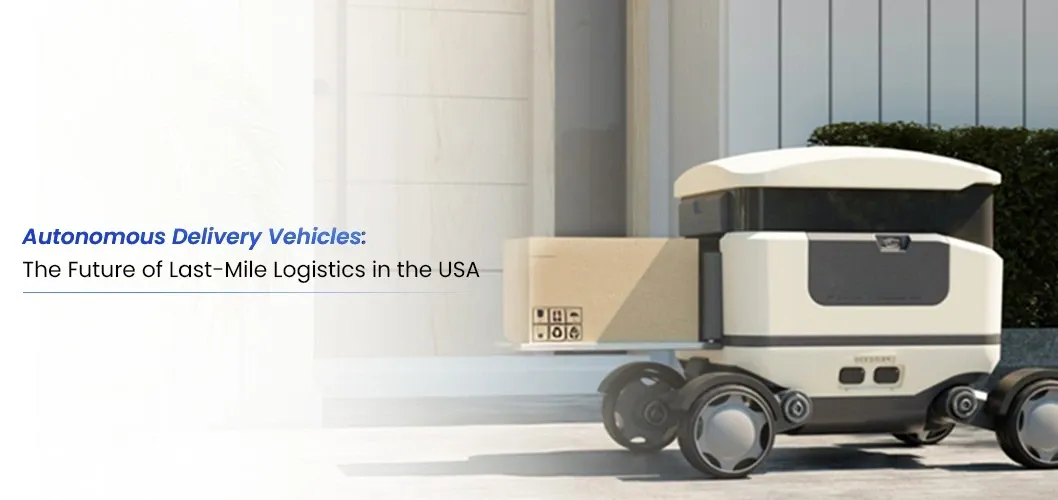
Autonomous Delivery Vehicles: The Future of Last-Mile Logistics in the USA

Introduction
The last mile has always been the most dramatic part of delivery. It is where customer promises either land beautifully or fall apart in public. One delay, one wrong turn, one missed handoff, and the whole brand experience starts looking shaky. In the USA, where consumer expectations keep getting sharper and delivery windows keep getting tighter, autonomous delivery vehicles are no longer a futuristic side note. They are becoming part of a serious logistics conversation, especially when paired with intelligent platforms that can plan, monitor, and adapt in real time. That is exactly where final mile delivery software of Mobility Infotech Logistics sees the road opening up.
Why the Last Mile in America Feels So Hard Right Now
The American last mile is messy. It deals with suburban sprawl, urban congestion, labor pressure, rising fuel costs, failed deliveries, customer impatience, and a flood of e-commerce orders that do not politely arrive in neat little waves. They come fast. They come unevenly. They come when demand spikes and road conditions refuse to cooperate. The World Economic Forum has highlighted how rising online demand, faster delivery expectations, and disruptive technologies are reshaping the last-mile ecosystem, while integrated logistics interventions can reduce costs, congestion, and emissions meaningfully over time.
This is why old-school dispatch thinking is starting to look tired. Static routes. Manual reassignment. Phone-call-based coordination. Spreadsheet-driven planning. It all feels a bit too fragile for modern delivery volumes. In my view, the companies that still treat last-mile logistics like a simple “send the driver and hope for the best” operation are not just behind. They are bleeding margin every single day.
Autonomous Delivery Vehicles Are Rewiring the Workflow
Let’s be honest. When people hear “autonomous delivery vehicles,” they often picture a fully self-driving van gliding through a neighborhood with zero friction and zero human oversight. That makes for a fun image, sure, but the real shift is more layered than that. In the USA, autonomous delivery is developing through pilots, restricted deployments, low-speed neighborhood vehicles, sidewalk robots, driver-assist systems, and structured testing environments rather than one dramatic overnight switch.
The NHTSA makes this clear. Fully automated vehicles are not broadly available for consumers today, and current deployment still revolves around safety oversight, testing, transparency, and regulatory development. States permit limited testing and pilot programs, while federal guidance continues to emphasize safety, monitoring, and cybersecurity. That matters. It tells us the future is not blind automation. It is controlled, intelligent automation.
So what does that mean for logistics leaders? Simple. The winning model is likely to be hybrid for a while. Human dispatchers, AI decision engines, assisted-driving capabilities, route optimization layers, autonomous devices in select zones, and strong customer communication working together. Not chaos. Or hype. Just better orchestration.
The Real Opportunity Is Bigger Than the Vehicle
A lot of brands focus on the machine. The robot. The drone. The autonomous van. Fair enough, because those are visible and exciting. But the deeper advantage sits behind the scenes. Without intelligent planning, even the smartest vehicle becomes an expensive object with nowhere useful to go.
That is where software earns its keep.
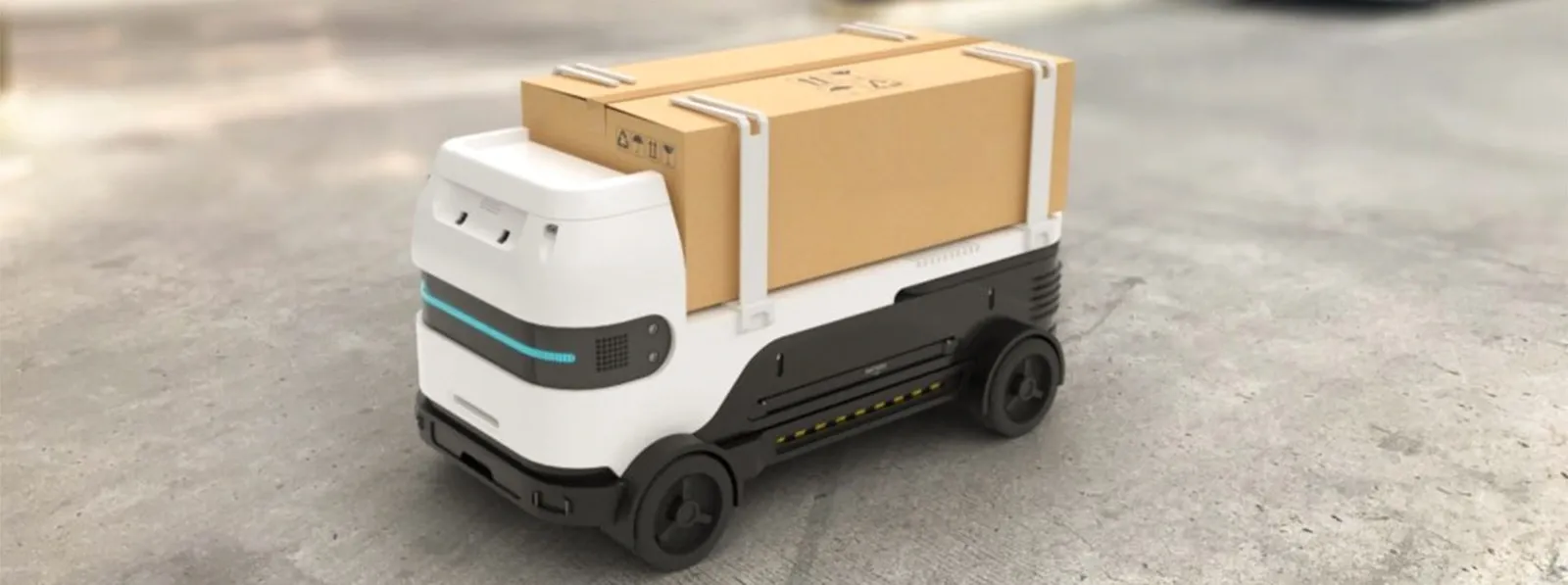
Autonomous delivery vehicles need order clustering, dispatch sequencing, traffic-aware adjustments, proof-of-delivery workflows, exception handling, geofenced rules, battery-aware planning, multi-stop optimization, and live visibility across the network. In other words, they need a digital brain. A good one. A very good one.
Mobility Infotech Logistics positions its platform around exactly this operational intelligence, highlighting AI-driven routing, real-time tracking, predictive analytics, fleet management, TMS integration, shipment tracking, multi-stage logistics coordination, and route generation across hundreds of riders using 200-plus constraint parameters. That is not decorative technology. That is infrastructure for scale.
Where Mobility Infotech Logistics Fits into This Future
Here is the part many companies miss. Autonomous delivery is not just about putting smarter vehicles on the road. It is about making every mile measurable, adaptable, and visible. Mobility Infotech Logistics is already speaking the language this future requires: AI-based transport systems, real-time data, route optimization, warehouse integration, carrier management, and end-to-end orchestration from first mile to last mile.
That makes the brand especially relevant for businesses exploring what comes next in the USA. A strong final mile delivery software platform can help delivery teams manage dynamic route planning, improve ETAs, reduce wasted mileage, and respond faster when reality interrupts the original plan. And reality always interrupts the original plan. Traffic jams happen. Customers reschedule. Drivers call out. The weather turns ugly. Dense routes collapse under one small disruption. Software that can think on its feet becomes a competitive weapon.
Mobility Infotech Logistics has also emphasized real-time visibility, proof of delivery, multi-hub coordination, ERP and CRM connectivity, and reporting tools that reduce manual inefficiency. In plain English, that means less guesswork, better control, and smoother scaling for operators that need to move quickly without losing the plot.
Why AI-Powered Last Mile Delivery Software Will Matter Even More Than Autonomous Hardware
Let’s say two logistics companies buy access to similar autonomous delivery technologies. Same class of vehicles. Same pilot geography. Same basic operating hours. Will they perform the same? Not even close.
The one with sharper software will win.
That is the uncomfortable truth. Hardware gets headlines. Software gets outcomes. AI-Powered Last Mile Delivery Software is what turns scattered delivery activity into a synchronized network. It can predict delays before they turn into complaints, optimize routes based on live road conditions, assign jobs according to capacity and location, and feed dispatchers cleaner information than manual systems ever could.
And there is another layer here. AI also improves customer communication. Better ETAs. Better alerts. Better expectation setting. The delivery itself matters, obviously, but so does the feeling of control. Customers hate uncertainty more than they hate waiting. If they know what is happening and when, trust rises. That emotional side of logistics gets overlooked far too often.
In the USA, where delivery density varies wildly from Manhattan blocks to sprawling suburban neighborhoods, software intelligence becomes even more important. The delivery environment is simply too uneven for rigid planning. You need a system that breathes with demand.
The Growing Role of last mile routing software in Autonomous Deployments
Routing used to be about finding the shortest path. Now? It is about finding the smartest one.
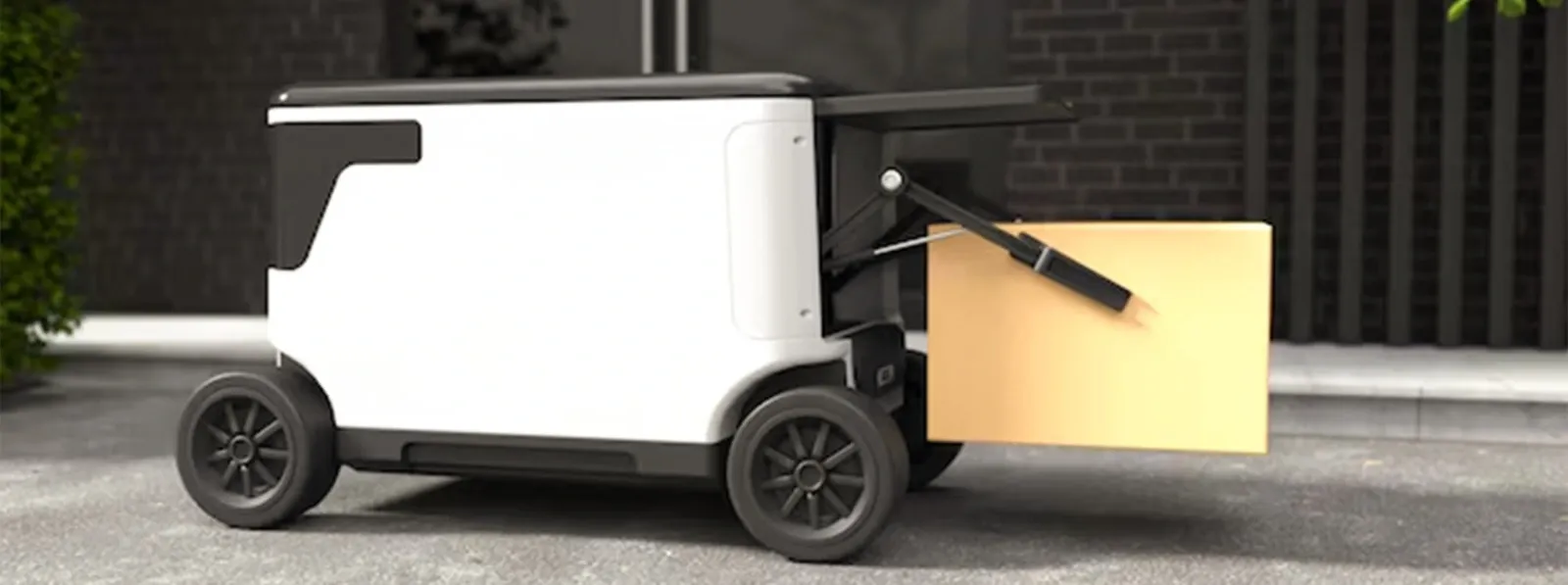
A modern last mile routing software stack does far more than draw lines on a map. It weighs traffic, delivery windows, order priority, driver shifts, customer presence, zone restrictions, vehicle capacity, service-level targets, and unexpected disruptions. When autonomous delivery vehicles enter the picture, routing gets even more nuanced. Suddenly, machine limitations, safety rules, battery levels, geofencing, curb access, and supervised handoff points all start influencing route decisions.
That is why routing is not a supporting feature anymore. It is the operating core.
Mobility Infotech Logistics has already built its messaging around intelligent routing, automated route generation, fleet visibility, and AI-native route optimization. For U.S. businesses considering autonomous delivery pilots, that kind of control layer is essential. Without it, autonomous assets may move, but they do not necessarily move profitably. And profitless innovation gets old very fast.
What the USA Can Expect Over the Next Few Years
No, every neighborhood in America is not about to be flooded with delivery robots next month. That is fantasy. But gradual adoption? Very likely. In fact, that is the more believable and more useful scenario.
We will probably see autonomous delivery expand in controlled lanes first: campuses, gated communities, business parks, predictable suburban loops, micro-fulfillment networks, retail partnerships, and low-speed urban districts. The broader U.S. rollout will depend on safety validation, public trust, local rules, infrastructure readiness, and how well software platforms can handle exceptions in real time. The NHTSA continues to stress safe testing, transparency, and staged deployment, which makes this gradual pathway the realistic one.
And that is not a drawback. It is actually healthy.
Logistics does not need a dramatic sci-fi leap. It needs dependable gains. Lower cost per stop. Better route compliance. Fewer failed deliveries. Cleaner customer updates. Less idle time. Better asset use. More control across peak demand. If autonomous delivery vehicles can help deliver those gains, and if AI software can coordinate them intelligently, then the future arrives one practical improvement at a time.
So, Is This the Future of Last-Mile Logistics?
Yes, but not in the simplistic way people often imagine.
The future is not just autonomous vehicles rolling around unsupervised while humans disappear from the picture. The future is a connected logistics ecosystem where people, vehicles, AI models, routing engines, customer notifications, warehouse signals, and real-time operational data all work in sync, transforming the way logistics operates. That is the bigger story. That is the more interesting story too.
For brands operating in the USA, the question is no longer whether automation will shape the last mile. It already is. The sharper question is whether your current delivery stack is ready to work with it. Can your platform re-optimize routes instantly? Can it give dispatchers live operational clarity? Can it connect warehousing, transport, and proof of delivery? Can it support scale without becoming a daily headache?
That is where Mobility Infotech Logistics has a real opening. Its focus on AI-driven orchestration, route intelligence, tracking, integrations, and data-backed logistics control aligns neatly with where last-mile delivery is headed. The road forward will not be simple. But it will be smarter. Faster too. And for the brands that prepare now, a lot more profitable.
Get in touch with our battle-tested sustainability, technology, and TMS specialists to explore tailored green logistics solutions.

You might also like
 Written by Jane Austen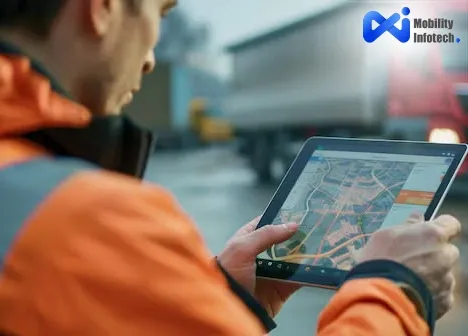
 Written by Michael S.
 Written by David Williams