
How Smart Route Planning Improves Delivery Speed and Fleet Utilization

Introduction
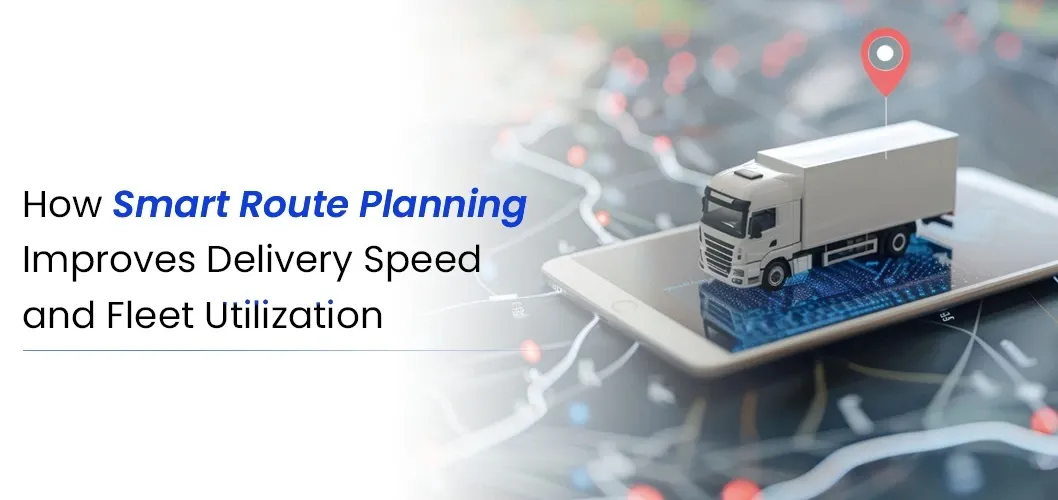
Smart route planning improves delivery speed by sequencing stops mathematically instead of manually, and it improves fleet utilization by loading every vehicle to its real capacity before a single wheel turns. In plain terms, the logistics management software decides in seconds what a dispatcher spends two hours guessing at, and it keeps deciding all day as traffic, cancellations, and new orders roll in.
That is the short answer. The longer answer involves money, and quite a lot of it, because American fleets are currently paying record prices to move goods inefficiently.
The Real Cost of a Bad Route
The American Transportation Research Institute's 2026 Analysis of the Operational Costs of Trucking puts the average cost of running a truck at $2.336 per mile in 2025, the highest figure in the report's history. Every unnecessary mile a vehicle drives is now the most expensive unnecessary mile it has ever driven.
And there are a lot of unnecessary miles. Industry benchmarks consistently place out-of-route mileage at around 10% of a delivery fleet's total distance. A 25-vehicle fleet averaging 120 miles per vehicle per day is quietly burning roughly 300 wasted miles daily. At ATRI's cost figure, that is about $700 a day, or over $175,000 a year, spent going the wrong way.
The pressure concentrates at the end of the journey. Last-mile delivery now absorbs 53% of total shipping costs, up from 41% in 2018, according to 2024 industry research on last-mile economics. The final few miles cost more than the warehouse, the linehaul, and the sortation combined. If your routing is weakest exactly where your costs are highest, the math never works in your favor.
What Smart Route Planning Actually Does
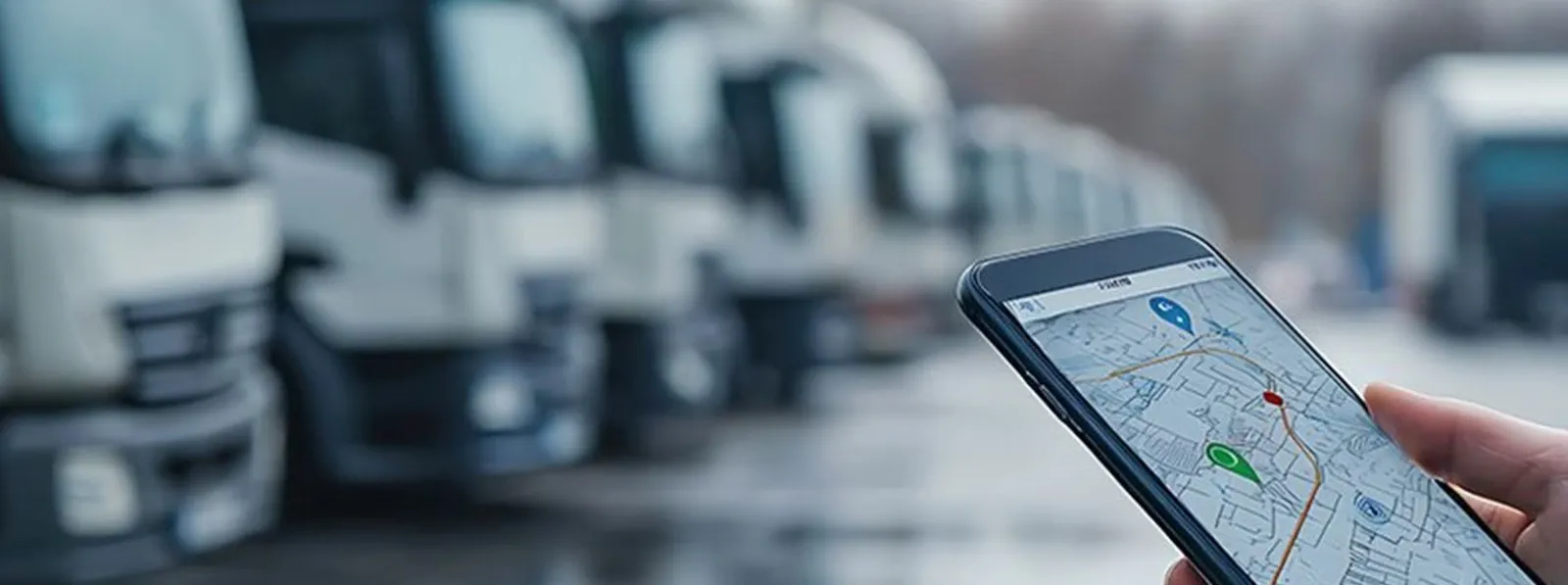
Manual planning answers one question: what order should the stops go in? Modern logistics automation software answers dozens simultaneously. Which driver has the hours left? Which vehicle has the cubic capacity? Which customer only accepts deliveries between 10 a.m. and noon? Which highway will be a parking lot at 4:15 p.m.? Mobility Infotech Logistics routing engine weighs more than 200 constraint parameters at once, which is not a contest a whiteboard was ever going to win.
The output is not just a prettier route. It is a fundamentally different operating rhythm:
Before the day starts
Orders are clustered by geography, time window, and vehicle fit. Loads are balanced so no driver finishes at 2 p.m. while another is still out at 8 p.m. Routes account for historical traffic patterns, not just distance on a map.
While the day runs
Real-time re-optimization reroutes around accidents and road closures. New pickups slot into existing routes instead of triggering a separate dispatch. Customers receive live ETAs, which matters more than most operators realize, because a missed delivery costs retailers an average of $17.20 per order according to 2023 last-mile cost research, and accurate ETAs are the single best defense against a customer not being home.
After the day ends
Planned versus actual data feeds back into the system. The routes get smarter every week because the software learns which stops always run long and which service times were fiction.
Where the Speed Actually Comes From
Delivery speed is rarely about driving faster. It comes from eliminating the dead time nobody logs: the 20 minutes a driver spends deciding which stop is next, the backtracking across town because two nearby orders landed on different routes, the second delivery attempt that should never have been necessary.
Compress those, and the same driver completes more stops in the same shift. Fleets adopting AI-based routing commonly report delivery time reductions in the 20 to 30% range, and Mobility Infotech Logistics customers have seen delivery delays fall by nearly 28% after switching to automated route re-optimization. Speed, it turns out, is mostly the absence of waste.
Fleet Utilization: The Metric Nobody Watches Until It Hurts
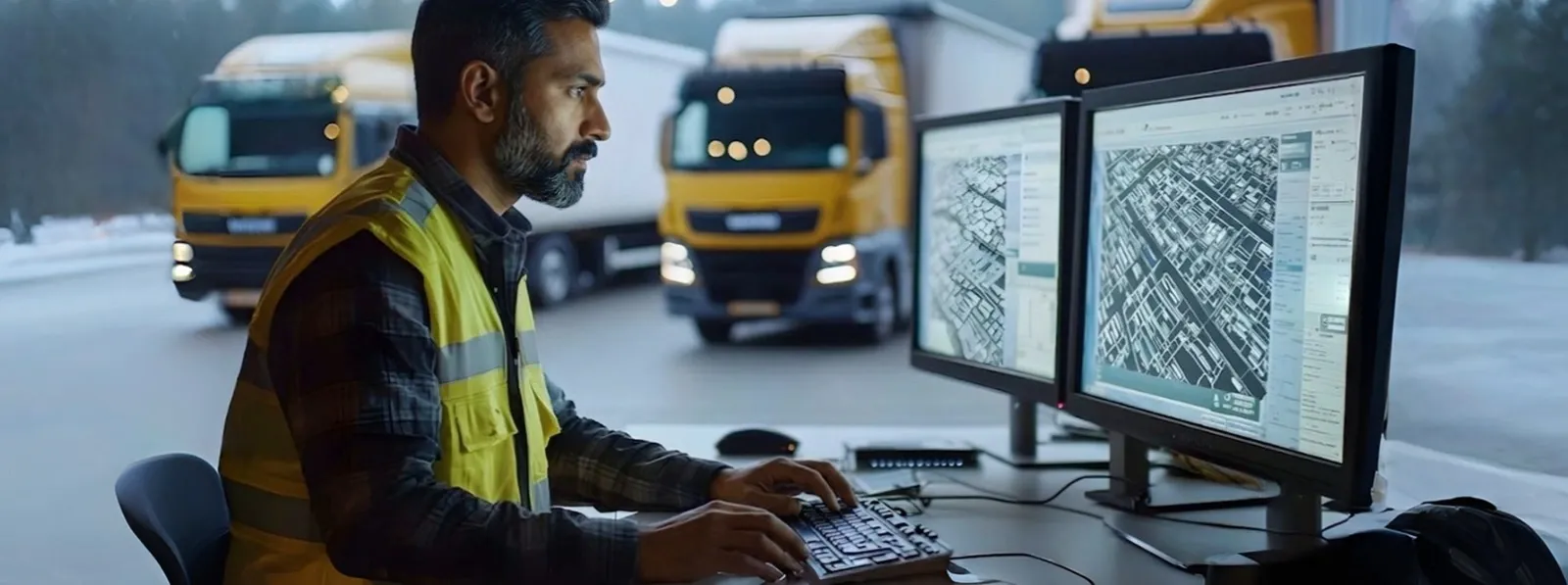
Here is an uncomfortable exercise. Take your total fleet capacity for last month, in stops or in cubic volume, and divide what you actually delivered by it. Most mid-sized US fleets land between 60 and 70%. That gap is a truck you are paying for and not using.
A logistics automation platform attacks utilization from three directions at once. It fills vehicles closer to true capacity by matching order volume to vehicle size rather than habit. It balances territories so demand spikes in one zone borrow capacity from another instead of triggering a rental or an overtime bill. And it exposes the fleet you actually need, which is frequently smaller than the fleet you have. Some operators discover they can retire two or three vehicles outright; others absorb 20% more volume without adding a single van. Either outcome is money.
This is also why the category is growing so fast. Fortune Business Insights projects the global logistics automation market will expand from $99.43 billion in 2026 to $260.75 billion by 2034. Businesses are not buying software for the dashboards. They are buying it because their competitors' cost per delivery keeps dropping.
From Guesswork to Proof in 90 Days
The switch is less dramatic than most operations teams fear. A typical rollout with modern logistics management software looks like this: weeks one and two are integration, connecting your order sources, ERP, and driver apps. Weeks three through six run optimized routes alongside your existing plans so you can see the delta before you commit to it. By week twelve, most fleets have hard numbers on miles saved, stops per driver, and on-time percentage, and the conversation shifts from whether the software works to how far to push it.
The businesses that get the most out of it share one habit: they trust the data over the tribal knowledge. The dispatcher who knows every shortcut in the county is a genuine asset. But intuition does not scale past 500 deliveries a month, and it does not re-plan itself at 2 p.m. when a truck breaks down on I-80.
Why US Businesses Choose Mobility Infotech Logistics
Mobility Infotech Logistics builds AI-native route optimization inside a complete logistics management software platform trusted by more than 600 brands. Routing, dispatch, live tracking, proof of delivery, and analytics run in one system, with low-code integrations for SAP, Oracle, NetSuite, and Microsoft Dynamics, so you are not stitching five tools together to move one package. Plan thousands of orders across hundreds of drivers in a few clicks, then watch the platform re-plan them all day long.
Faster deliveries, fuller trucks, fewer miles. That is the whole pitch, and the ROI calculator on our site will tell you what it means in your numbers, not ours.
Book a demo with Mobility Infotech Logistics and see your own routes optimized live, with your stops, your vehicles, and your constraints.
- content
- Introduction
- The Real Cost of a Bad Route
- What Smart Route Planning Actually Does
- Where the Speed Actually Comes From
- Fleet Utilization: The Metric Nobody Wat...
Get in touch with our battle-tested sustainability, technology, and TMS specialists to explore tailored green logistics solutions.

You might also like
 Written by Jane Austen
 Written by Michael S.
 Written by David Williams