
How AI-Powered Route Optimization Accelerates Last-Mile Delivery Performance

Introduction
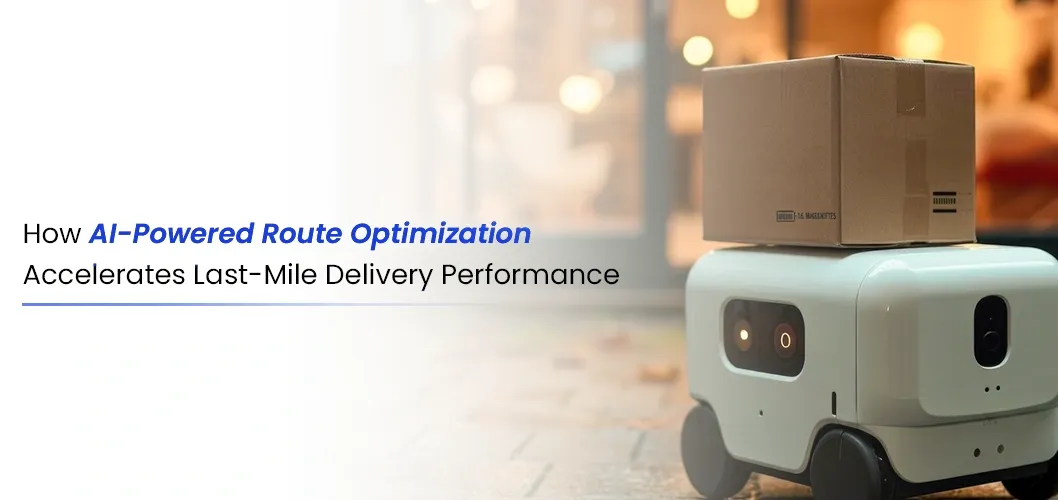
You know that feeling when the app says "10 minutes away" and forty-five minutes later you're still staring at the door? Most of us have lived that. That gap between the promise and the actual truck on the road is where logistics businesses quietly lose money. Not dramatically. Just steadily, mile after mile.
Here's a number that should make any operations head a little uneasy: last-mile delivery now eats up 53% of total shipping costs, up from 41% back in 2018 (Last-Mile Delivery Optimization Trends, FleetRabbit). Twelve points in less than a decade. That's a margin problem with a name attached to it.
Why now though? Mostly because customer expectations shifted. 80% treat same-day delivery as normal, not a perk, and 77% want their order inside two hours (Last-Mile Delivery Statistics and Industry Insights, Smartroutes 2026). Good luck meeting that with a route plan printed at 6 AM and handed to a driver like gospel. You can't.
This is exactly where AI-based route optimization stops sounding like a sales pitch and starts looking like the only sane way forward.
What Is AI-Based Route Optimization, Really?
Let's drop the jargon for a second. Traditional route planning is fixed. You map it once in the morning, hand it off, cross your fingers. The day, predictably, refuses to cooperate.
AI-based route optimization doesn't work like that. It pulls in live data, traffic, weather, new orders mid-shift, delivery windows, which vehicles are free, and keeps recalculating. Not once. Continuously. If a road backs up at 11:17 AM, the plan changes at 11:17 AM, not three hours later once the driver's already boxed in (7 Last Mile Delivery Trends, OneRail 2026).
That gap, between reacting instantly and reacting eventually, is basically the whole story. Static planning assumes the world holds still. It never has.
Why Static Routes Quietly Fall Apart
Picture an ordinary Tuesday. A road shuts for repairs. A customer pushes their slot back. Three same-day orders land out of nowhere. A fixed route can't absorb any of that, so dispatchers patch things by hand, drivers improvise, and customers get an ETA that's basically fiction by lunchtime.
We've watched this pattern play out across fleets big and small. It's not that people aren't trying hard enough. It's that the tool they were handed was never built for this much chaos.
The Numbers Don't Lie
Enough opinions for a second. Let's look at what's actually been measured.
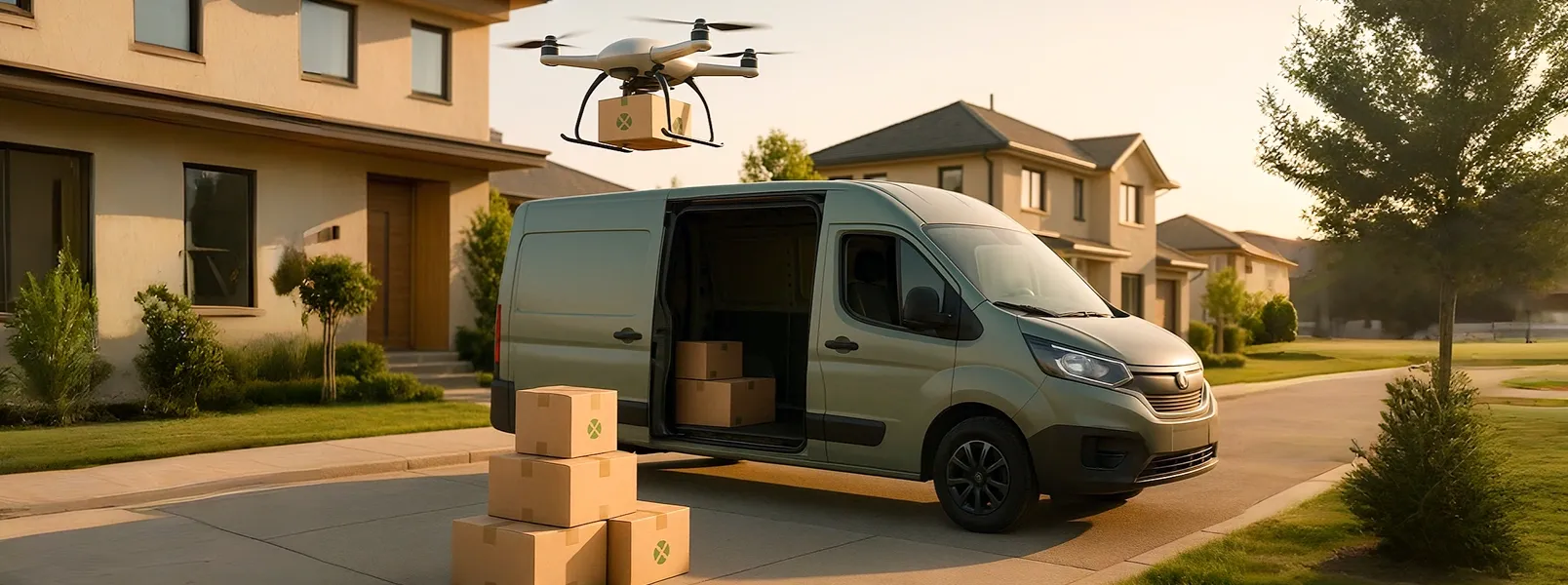
DHL's Greenplan dynamic routing algorithm cut delivery costs by 20% (Last-Mile Delivery Statistics and Industry Insights, Smartroutes 2026). Tesco's AI-powered routing setup saved 11.2 million miles and trimmed fuel use by 8% per order, per that same report. UPS's ORION system reportedly shaves off something like 100 million delivery miles every year through algorithmic routing alone (Last Mile Delivery Market Opportunities & Forecast, Coherent Market Insights).
Sit with that for a second. A hundred million miles. One company. One year. Just from better math on a map.
Here's the bit that should grab smaller operators by the collar: last mile route optimization software tends to deliver an immediate 15-20% jump in efficiency, while early AI adopters report up to a 15% cut in logistics costs with roughly triple the ROI versus older methods (Last-Mile Delivery Statistics and Industry Insights, Smartroutes 2026). And yet AI adoption across logistics companies still sits at around 12% (same report). Kind of strange, if the upside is visible.
My honest guess? Comfort. Old systems feel familiar, even when familiar is quietly expensive.
Zoom out and the market backs this up. Last-mile delivery hit $177.94 billion in 2025 and could blow past $453 billion by 2035 (Last-Mile Delivery Optimization Trends, FleetRabbit). That kind of growth doesn't happen on hype alone.
Real-Time Route Optimization: The Part Everyone Underestimates
Ask yourself something honestly. Does your routing tool know what's happening on the road right now, or just what was true three hours ago?
Big difference. Genuinely.
Real-time route optimization isn't some nice-to-have anymore. It's quietly become the baseline. The Last Mile Delivery Market Report 2026 from Research and Markets lists rising adoption of real-time route optimization systems as one of five major trends carrying the industry through 2030, alongside autonomous vehicles and electric fleets.
Why does the urgency matter? Because failed delivery attempts cost real money. Roughly 5% of last-mile deliveries fail on the first try, averaging $17.78 per failure (Last Mile Delivery Statistics: Key Trends & Insights, ClickPost 2026). Run that across a fleet doing a few hundred stops daily and it stops looking small, fast.
Real-time systems chip away at that failure rate by adjusting for driver delays, customers who aren't home, bad addresses, before it snowballs into a missed window. Companies running real-time tracking report a 15% bump in on-time deliveries (Last Mile Delivery Analytics, Locus 2026). Sounds modest, until you're juggling a thousand stops a day.
Customer Trust Gets Built (Or Quietly Destroyed) Right Here
91% of consumers actively track their packages, plenty checking more than once a day (Last-Mile Delivery Statistics and Industry Insights, Smartroutes 2026). That's not impatience. That's people rearranging their afternoon around your ETA. Miss that window without a heads up, and you've probably lost the next order too.
Where Does Mobility Infotech Logistics Fit Into This?
Right in the thick of it, honestly. This is the exact problem we wake up trying to solve.
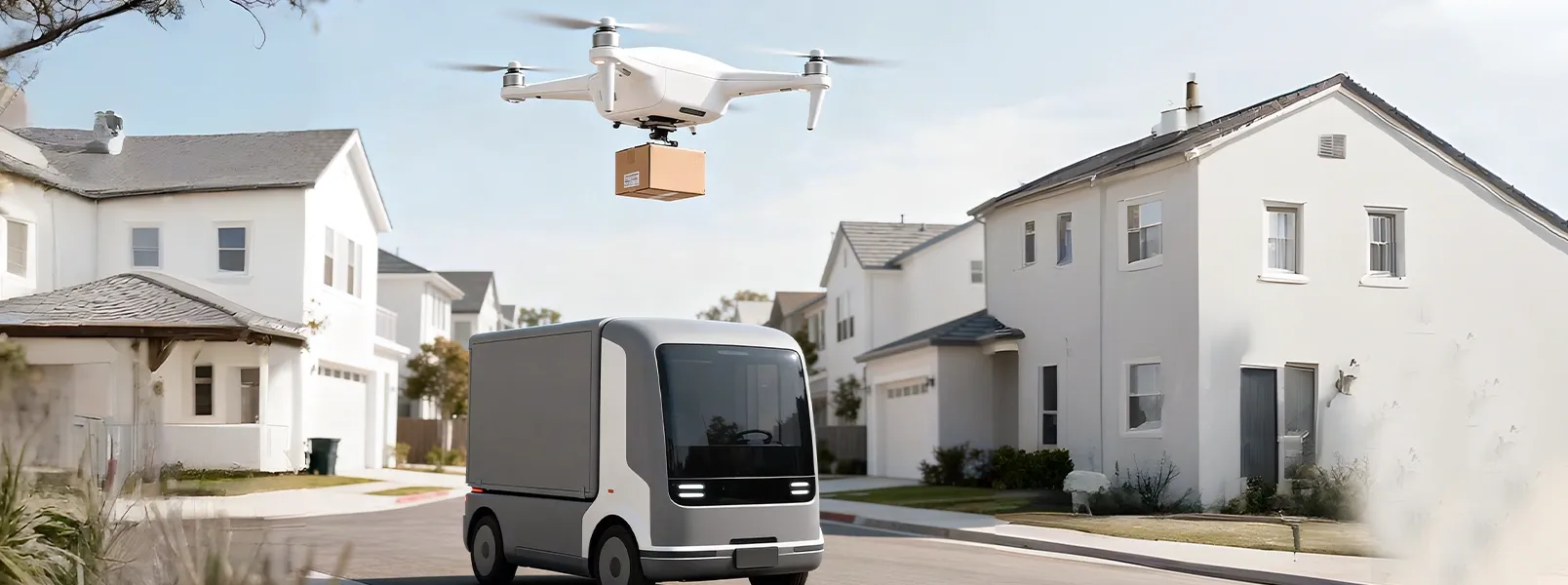
At Mobility Infotech Logistics, our Transport Management System was built on a simple idea: logistics should get smarter, not harder. Our AI-driven routing engine studies road patterns, traffic flow, stop clusters, even driver behavior, then builds routes that actually shrink miles and minutes, not just look efficient on a slide. When something shifts mid-route, the system adjusts on the spot and pushes the new path straight to the driver's app.
We're not going to promise this fixes everything by next Tuesday. It doesn't, and we'd rather say that upfront. It needs clean data, a few weeks learning your delivery patterns, and a team willing to trust the system over old habits. But the lift, fewer failed attempts, tighter ETAs, lower fuel spend, shows up early. Not buried in some far-off quarterly report.
That's the "We Care" part of who we are, and we mean it more than most companies that print it on a homepage. We'd rather show you a real dashboard than hand you a glossy feature list.
Wrapping This Up
Last-mile delivery isn't getting simpler, and pretending otherwise helps nobody. Costs keep climbing. Customers keep getting pickier, fair or not. And the businesses winning right now usually aren't the biggest ones. They're just the ones whose routes adapt faster than their problems can pile up.
AI-based route optimization, last mile route optimization, real-time route optimization, these aren't three buzzwords fighting for a slice of your budget. They're three layers of the same answer. Plan smart. Adjust live. Keep people in the loop without promising more than you can deliver.
Curious what that looks like for your fleet specifically? That's a real conversation worth having, not a sales pitch dressed up as one. Reach out to Mobility Infotech Logistics whenever you're ready to start it.
- content
- Introduction
- What Is AI-Based Route Optimization, Rea...
- The Numbers Don't Lie
- Real-Time Route Optimization: The Part E...
- Where Does Mobility Infotech Logistics F...
Get in touch with our battle-tested sustainability, technology, and TMS specialists to explore tailored green logistics solutions.

You might also like
 Written by Jane Austen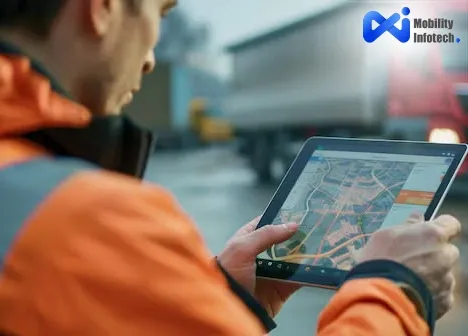
 Written by Michael S.
 Written by David Williams