
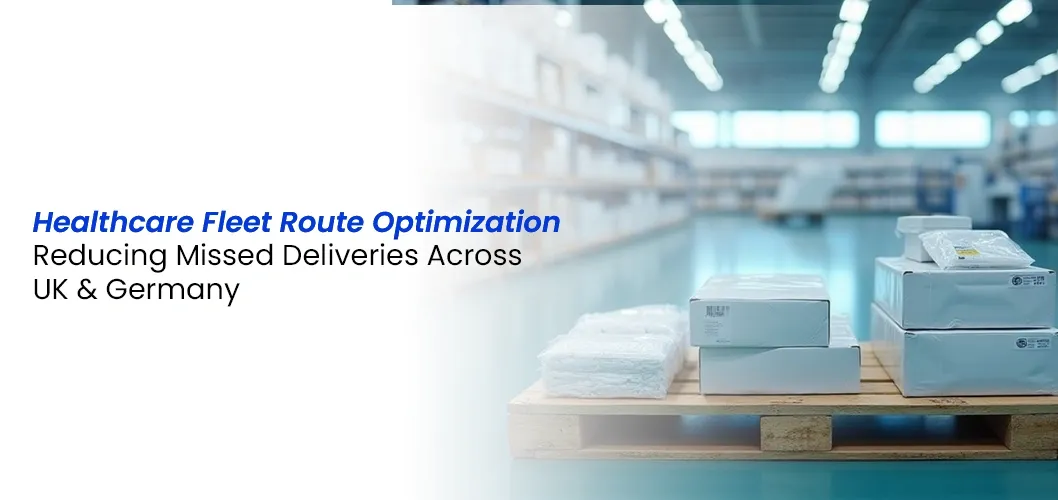
Healthcare Fleet Route Optimization Reducing Missed Deliveries Across UK & Germany

Introduction
A missed delivery is annoying for most industries. For healthcare fleets, it can mean a care home doesn't get medication on time, a diagnostic sample sits too long before reaching a lab, or a home care visit gets pushed back for a patient who genuinely needed it that morning. The stakes are just different, and honestly, the routing tools healthcare logistics teams have historically relied on haven't always kept up with that reality.
Healthcare fleets across the UK and Germany are dealing with a specific mix of pressures right now: tighter delivery windows, more home-based care, and growing volumes of specialty pharma and diagnostic shipments. This is where a reliable route optimization system can make a meaningful difference. It's worth looking at why so many missed deliveries trace back to routing decisions rather than genuine logistical impossibilities.
Why Healthcare Routing Is Different
Healthcare deliveries rarely fit neatly into standard delivery windows. A care home might only accept deliveries during specific shift changes. A lab might need samples within a strict window from collection to processing before results become unreliable. Home care visits often have patient-specific time preferences that aren't flexible. Generic routing software tends to treat every stop as roughly equivalent, which just doesn't hold up when the "customer" is a patient waiting on medication.
A dedicated route optimization system built with healthcare logistics in mind treats these constraints as first class inputs rather than exceptions to work around after the fact.
What's Driving Missed Deliveries Right Now
Most missed healthcare deliveries aren't caused by dramatic failures, they're caused by small, avoidable planning mistakes compounding over a route. A driver running fifteen minutes behind on stop three because of a poorly sequenced route ends up missing a hard cutoff at stop seven. A vehicle gets sent into a restricted low emission zone without checking beforehand, meaning it has to reroute and lose valuable time. These aren't rare edge cases, they happen constantly in operations still relying on manual or semi-manual planning.
The Cost of a Missed Healthcare Delivery
Unlike a missed parcel delivery where the fix is just redelivering tomorrow, a missed healthcare delivery often has no easy do-over. Medication schedules matter. Sample viability windows matter. Patient wellbeing matters. That's part of why healthcare logistics operators are increasingly willing to invest in route optimization tools that other sectors might consider optional.

Building Reliability Into the Route, Not Just Hoping For It
Good route optimization software doesn't just find the shortest path between stops, it builds in the constraints that actually matter for healthcare delivery. Hard time windows get treated as non-negotiable rather than aspirational. Vehicle compliance for restricted zones gets checked automatically before a route is even suggested. And if something changes mid-route, whether that's traffic, a new urgent stop, or a delay at an earlier location, the system recalculates in real time rather than leaving the driver to guess how to recover.
This matters even more in Germany, where low emission zone rules are strict and healthcare fleets can't afford the delay of an unplanned reroute around a restricted area.
Where Route Optimization Software Fits Into the Bigger Picture
The broader UK and Germany logistics technology market has been shifting fast, with Europe's route optimization software space now representing a meaningful share of the global market and Germany specifically tipped as one of the fastest growing regional markets for this kind of technology. Healthcare logistics operators are very much part of that growth curve, often adopting route optimization software earlier than general freight operators because the cost of getting it wrong is simply higher.
How Mobility Infotech Logistics Supports Healthcare Fleets
At Mobility Infotech Logistics, we've built route optimization that treats hard delivery windows as genuinely hard, not just a preference the system tries to respect when convenient. For healthcare fleets across the UK and Germany, that means medication deliveries, diagnostic samples, and home care visits get routed with the urgency and reliability they actually require.
Our platform also builds in automatic compliance checking for low emission zones, so healthcare vehicles aren't accidentally routed into restricted areas and forced into last-minute detours that eat into already tight delivery windows. Everything runs on infrastructure that's ISO certified and GDPR compliant too, which matters a great deal when you're handling healthcare-related delivery data.
What Home Care Expansion Means for Routing Complexity
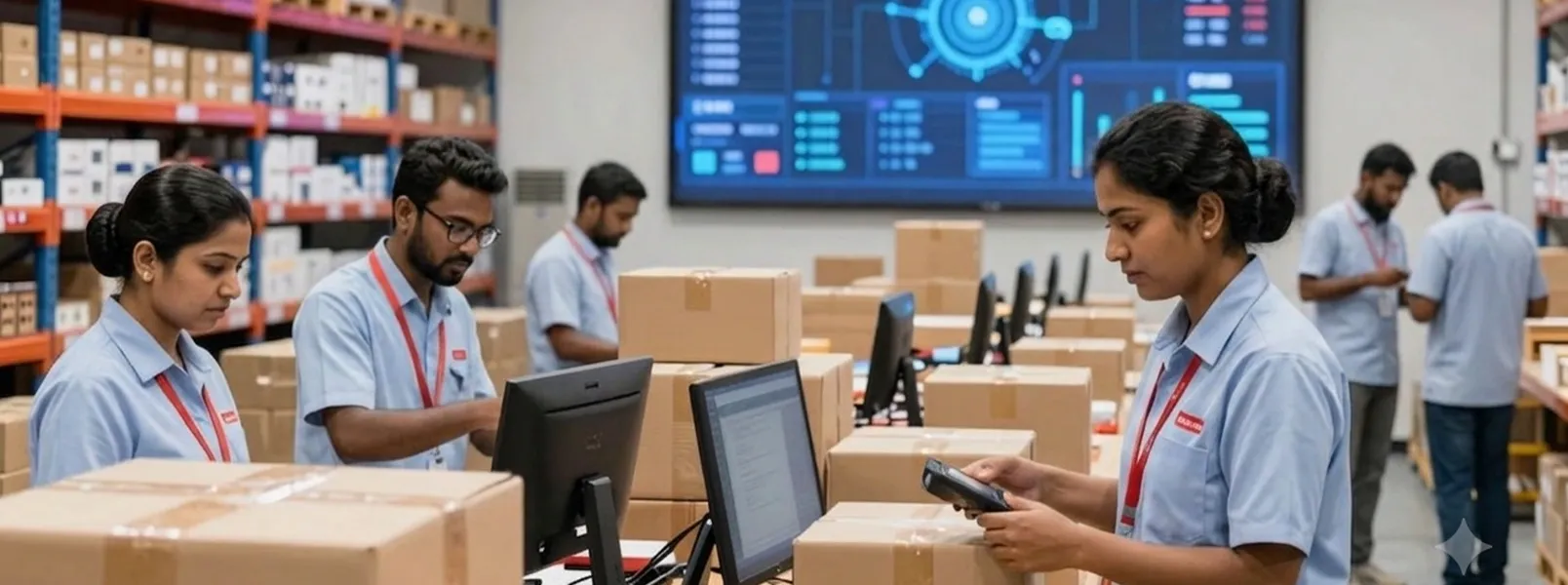
More care is moving out of hospitals and into people's homes across both the UK and Germany, driven partly by cost pressures on the healthcare system and partly by patient preference. That shift sounds straightforward on paper but it adds real complexity to routing. Instead of a handful of large, predictable institutional stops, fleets are increasingly managing hundreds of individual home addresses, each with its own access instructions, time preferences, and sometimes specific handling notes for the patient involved.
This is exactly the kind of scenario where manual planning starts to visibly break down. A human planner juggling a few dozen institutional stops can manage reasonably well with experience and local knowledge. The same planner trying to sequence three hundred individual home visits across a sprawling metro area, each with different constraints, is fighting a losing battle against complexity that software handles far more reliably.
Making the Case Internally
If you're trying to build a case for investing in better routing within a healthcare logistics operation, missed delivery data is usually the strongest argument. Pull the numbers on how many deliveries missed their window last quarter and what caused each one. More often than not, a clear pattern emerges around routing decisions rather than genuinely unavoidable circumstances, and that pattern makes the investment case for itself.
Getting Buy-In From Drivers and Care Teams
Technology rollouts in healthcare logistics succeed or fail based on whether the people using them actually trust the system. Drivers who've spent years learning shortcuts and local quirks can be understandably skeptical of software telling them a different order is better. The way around this isn't to force adoption overnight, it's to show the data. Run the optimized routes alongside existing routes for a few weeks, compare missed window rates, and let the results make the argument. Most skepticism fades once drivers see fewer angry phone calls and less scrambling to catch up after a delay. This practical approach is also central to how Mobility Infotech Logistics helps teams introduce smarter routing without disrupting day-to-day operations.
Get in touch with our battle-tested sustainability, technology, and TMS specialists to explore tailored green logistics solutions.

You might also like

 Written by Michael S.
 Written by David Williams
 Written by Albert Camus