
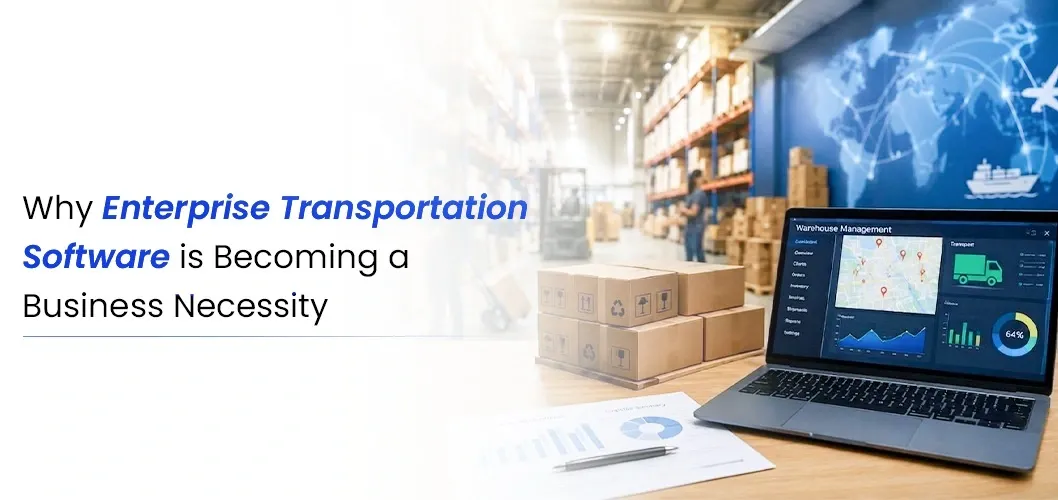
Why Enterprise Transportation Software Is Becoming a Business Necessity

Introduction
Enterprise transportation software has crossed the line from competitive advantage to operating requirement. The reason is simple. The cost of moving goods in America is rising faster than most companies can absorb, customer expectations are tightening every quarter, and the volume of decisions a modern shipping operation makes each day has outgrown what spreadsheets and dispatcher instinct can handle. Businesses that run their transportation on dedicated best logistics management software are pulling measurably ahead of those that do not, and the gap is widening on both cost and customer experience.
That is the short answer. The longer answer is worth your next five minutes, because the numbers behind it explain exactly where your margin is leaking and what the companies outpacing you are doing differently.
The Math Behind the Shift
Start with the line item nobody can ignore anymore. According to Statista's 2023 analysis, last-mile delivery has grown from 41% of total shipping costs in 2018 to 53%. More than half of what American businesses spend on shipping is now consumed by the shortest leg of the journey. On top of that, industry research published by GoBolt in 2026 found that US delivery costs rose an average of 12% between 2024 and 2025 alone, driven by labor shortages, fuel volatility, and urban congestion.
Failed deliveries make the picture worse. Roughly 5% of US deliveries fail on the first attempt at an average cost of $17.78 per package, and 45% of those failures trace back to something as fixable as an address error. Multiply that across a fleet running thousands of stops a week, and you are looking at a six-figure annual leak that better software closes almost immediately.
No surprise, then, that in a 2024 survey of retail executives, 85% named reducing total cost per order as their single biggest last mile priority. The pressure is real, it is quantified, and it is sitting on every operations leader's desk in the country.
Your Customer Already Set the Clock
Cost is only half the squeeze. The other half is the person waiting on the porch. Surveys conducted in 2024 found that 80% of consumers now consider same-day delivery a standard expectation rather than a premium service. B2B buyers are not far behind, because the people approving your purchase orders shop on Amazon at home and bring those expectations to work on Monday.
Meeting that clock without burning cash requires three things happening at once: routes that adapt in real time, live visibility across every shipment, and proactive communication when something slips. A dispatcher with a phone and a whiteboard can manage one of those on a good day. An enterprise transportation platform manages all three at scale, every day, without breaking a sweat.
What Enterprise Transportation Software Actually Changes
The best logistics management software does not just digitize what you already do. It changes the shape of the operation. AI-driven route optimization weighs hundreds of constraint parameters, from delivery windows and vehicle capacity to driver hours and live traffic, and produces plans no human team could compute in time to act on them. Real-time tracking replaces the daily flood of "where is my order" calls with a live link the customer checks themselves. Automated carrier management assigns loads based on cost, performance, and capacity instead of habit.
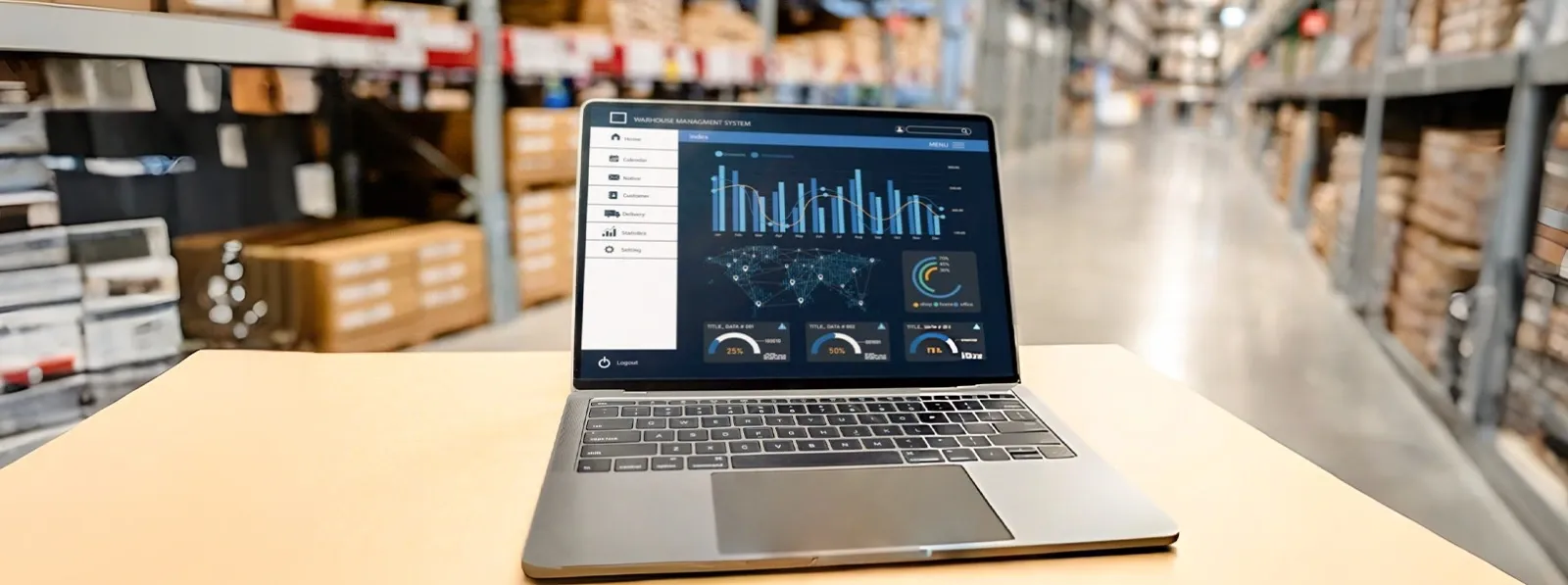
Then there is the part finance teams love. A proper logistics management system turns transportation from a black box into a dashboard. Cost per order, on time in full rates, empty miles, detention charges, driver productivity. When every metric is visible weekly instead of discovered quarterly, decisions stop being autopsies and start being adjustments.
The Adoption Curve Is Not Waiting for You
The market data tells you where your competitors are heading. Fortune Business Insights projects the global transportation management system market will grow from $21.30 billion in 2026 to $44.84 billion by 2034, a 9.8% annual clip, with North America holding a 39.14% share in 2025, the largest of any region. Global Market Insights reported in December 2025 that large enterprises already account for 68% of that spending.
Read those numbers together, and the message is uncomfortable but clear. The biggest players in your market have already made this investment, and the overall pool of businesses running on modern logistics software is set to double within eight years. Every quarter you wait, the baseline you are competing against gets more automated, more visible, and cheaper to run per order.
How to Choose Without Getting Burned
Not every platform deserves the enterprise label, so judge candidates on the things that separate real systems from dressed-up dashboards. The best logistics management system for your business should integrate with what you already run, whether that is SAP, Oracle, NetSuite, or Microsoft Dynamics, through clean APIs rather than expensive custom builds. It should cover the full journey from first mile pickup through mid mile transit to last mile delivery, because visibility that stops at the warehouse door is only half a picture. It should optimize routes with genuine AI, not a repackaged mapping tool. And it should scale, because software that fits you today and chokes at twice the volume is a purchase you will make twice.
Implementation speed matters too. Platforms built on low code integration frameworks can go live in weeks, which means the savings start showing up in the same fiscal year you signed the contract.
Where Mobility Infotech Fits In
This is exactly the problem Mobility Infotech Logistics was built to solve. Our AI native platform optimizes routes across hundreds of vehicles using more than 200 constraint parameters, connects first mile, mid mile, and last mile operations under one roof, and plugs into your existing ERP through low-code integrations.
The businesses winning on delivery in 2026 did not get lucky. They got equipped. If your transportation operation still runs on spreadsheets, phone calls, and hope, the most expensive thing you can do next quarter is nothing.
Book a demo with Mobility Infotech Logistics for logistics software and see what your routes, your fleet, and your cost per order look like with intelligence behind them.
- content
- Introduction
- The Math Behind the Shift
- Your Customer Already Set the Clock
- How to Choose Without Getting Burned
- Where Mobility Infotech Fits In
Get in touch with our battle-tested sustainability, technology, and TMS specialists to explore tailored green logistics solutions.

You might also like
 Written by Jane Austen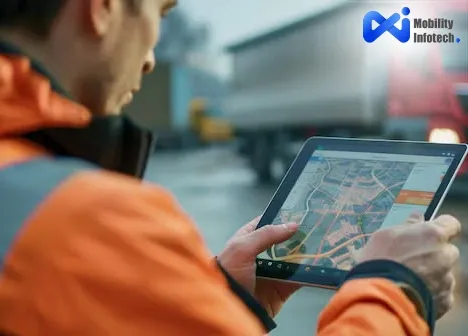
 Written by Michael S.
 Written by David Williams