
Why Cloud-Based Route Optimization Software is Replacing Legacy Systems in the USA

Introduction
Look at the highway. American supply chains across the USA are currently enduring a quiet, agonizing breakdown. It is not something you notice immediately while driving past 18-wheelers on Interstate 95, but inside the dispatch offices, it is pure chaos. Old on-premises desktop software is blinking rapidly with error codes, crashing under pressure, and completely failing to handle the massive volatility of modern American consumer demand. Legacy architecture can no longer keep pace, making Cloud-Based solutions essential and gradually Replacing outdated systems.
Think about the stark reality of modern freight. Congestion is worsening by the day. According to the comprehensive 2025 Urban Mobility Report published by the Texas A&M Transportation Institute, traffic delays cost the American economy billions of dollars annually in wasted fuel and lost productivity, a staggering burden that forces distribution companies to rethink their baseline operations. Sitting in gridlock is expensive. When an unexpected accident freezes traffic on the bypass, old systems leave dispatchers blind. They have to call drivers manually. It is an archaic dance that drains profit margins rapidly.
That is precisely why everything is shifting toward the web. Modern transportation demands require flexibility, speed, and massive computing capacity. Forward-thinking carriers are abandoning local server racks to adopt flexible, next-generation infrastructure. This transition is not a simple IT upgrade. It is an act of sheer survival. Embracing a native cloud based route optimization software by Mobility Infotech Logistics is rapidly becoming the standard operational strategy for businesses that refuse to get left behind by nimbler competitors.
The Crashing Weight of Desktop Antiquity
Web-hosted ecosystems work differently. They pool massive, distributed computing power to solve complex combinatorial problems in seconds rather than hours. This speed alters everything. A modern cloud based route optimization software utilizes advanced, multi-tenant cloud networks to calculate billions of routing permutations simultaneously. It factors in weather patterns, sudden highway collisions, driver hour limitations, and specific customer delivery windows all at once. Magic? No, just massive, scalable server architecture.
Let us talk about immediate visibility. When a sudden storm system rolls through the Midwest, the platform adapts instantly. It pushes real-time, turn-by-turn route updates directly to a driver's mobile application without requiring human intervention from dispatch. The driver avoids the worst of the weather completely. Efficiency skyrockets. Fuel consumption plummets. This is not just a minor convenience for corporations. It fundamentally reshapes how a company scales its operations without adding massive administrative overhead.
Consider the regulatory pressures piling onto the transportation sector. The US Environmental Protection Agency highlighted in their 2025 National Emissions Inventory Data that heavy-duty transportation remains a primary target for aggressive carbon reduction initiatives across multiple states. You cannot reduce emissions if your trucks are driving empty miles due to poorly planned sequencing. Transitioning to an intelligent route optimization system enables fleet operators to minimize empty backhauls by dynamically matching unassigned return trips with nearby available freight loads on the fly.
Keeping America’s Goods Moving
The 2025 ATA Freight Transportation Forecast outlines that trucks move over 11.4 billion tons of domestic freight annually. Optimizing even a small fraction of these routes via cloud systems translates to millions of gallons of saved diesel fuel across the country.
Is integration difficult? Not anymore. Unlike old enterprise software that required custom coding and months of on-site implementation, modern web platforms utilize flexible application programming interfaces. They connect seamlessly with your existing warehouse management systems and telematics devices. Data flows smoothly across the organization. Silos disappear instantly. This creates a unified operational picture that allows executives to make decisions based on accurate data rather than vague intuition.
How Cloud Architecture Rewrites the Logistics Rulebook
Web-hosted ecosystems work differently. They pool massive, distributed computing power to solve complex combinatorial problems in seconds rather than hours. This speed alters everything. A modern cloud based route optimization software utilizes advanced, multi-tenant cloud networks to calculate billions of routing permutations simultaneously. It factors in weather patterns, sudden highway collisions, driver hour limitations, and specific customer delivery windows all at once. Magic? No, just massive, scalable server architecture.
Let us talk about immediate visibility. When a sudden storm system rolls through the Midwest, the platform adapts instantly. It pushes real-time, turn-by-turn route updates directly to a driver's mobile application without requiring human intervention from dispatch. The driver avoids the worst of the weather completely. Efficiency skyrockets. Fuel consumption plummets. This is not just a minor convenience for corporations. It fundamentally reshapes how a company scales its operations without adding massive administrative overhead.
Consider the regulatory pressures piling onto the transportation sector. The US Environmental Protection Agency highlighted in their 2025 National Emissions Inventory Data that heavy-duty transportation remains a primary target for aggressive carbon reduction initiatives across multiple states. You cannot reduce emissions if your trucks are driving empty miles due to poorly planned sequencing. Transitioning to an intelligent route optimization system enables fleet operators to minimize empty backhauls by dynamically matching unassigned return trips with nearby available freight loads on the fly.
Moving America's Weight
The 2025 ATA Freight Transportation Forecast outlines that trucks move over 11.4 billion tons of domestic freight annually. Optimizing even a small fraction of these routes via cloud systems translates to millions of gallons of saved diesel fuel across the country.
Is integration difficult? Not anymore. Unlike old enterprise software that required custom coding and months of on-site implementation, modern web platforms utilize flexible application programming interfaces. They connect seamlessly with your existing warehouse management systems and telematics devices. Data flows smoothly across the organization. Silos disappear instantly. This creates a unified operational picture that allows executives to make decisions based on accurate data rather than vague intuition.
The Financial Realities Driving the Shift
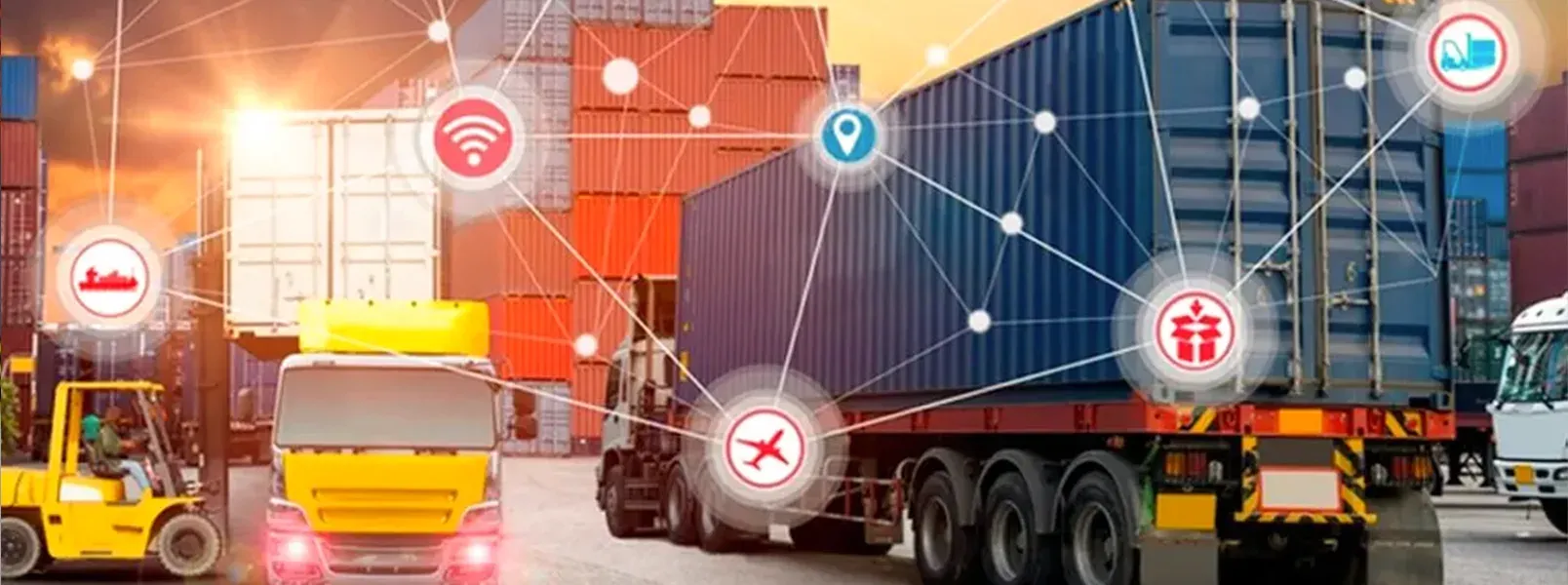
Money matters most. The capital expenditure required to buy traditional software licenses is notoriously prohibitive for mid-sized logistics businesses. You pay an enormous upfront fee for a product that depreciates immediately. Cloud models flip this dynamic entirely. By utilizing a predictable subscription structure, companies can scale their software utilization upward during peak holiday shipping seasons and scale it downward when demand cools off in the spring. Cash flow remains healthy.
Look at driver retention as well. The US Department of Labor noted in a recent 2025 Bureau of Labor Statistics Occupational Outlook report that driver turnover remains a persistent, highly disruptive challenge for long-haul carriers. Drivers hate bad routes. They get frustrated when sent into tight residential neighborhoods with low clearances or forced to wait hours past their appointment times due to poor scheduling. Providing an optimized, realistic plan keeps drivers happy and reduces costly turnover rates significantly.
What about customer expectations? They are higher than ever. The modern B2B buyer expects the same level of transparency they get from a personal food delivery app. They want precise, real-time arrival estimates. If a legacy system cannot provide an automated tracking link, the customer will simply find another carrier who can. A robust route optimization solution by Mobility Infotech Logistics provides automated text alerts and live map tracking for receivers, drastically reducing customer service inquiries and building deep operational trust.
- content
- Introduction
- The Crashing Weight of Desktop Antiquity
- Keeping America’s Goods Moving
- How Cloud Architecture Rewrites the Logi...
- The Financial Realities Driving the Shif...
Get in touch with our battle-tested sustainability, technology, and TMS specialists to explore tailored green logistics solutions.

You might also like
 Written by Jane Austen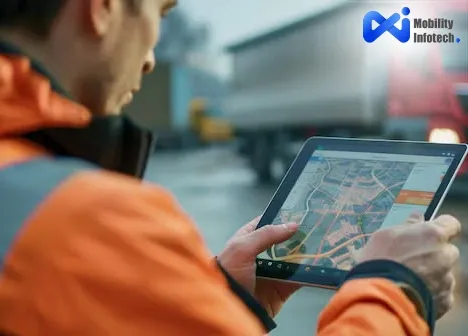
 Written by Michael S.
 Written by David Williams