
Why AI-Driven Logistics Software Companies Are Leading Digital Transformation

Introduction
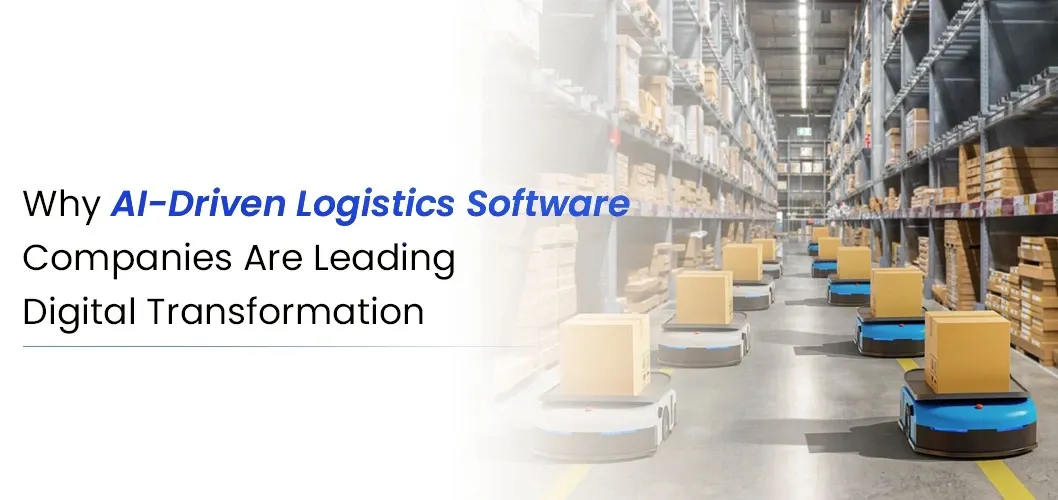
Somewhere off an American interstate right now, a dispatch manager is studying a screen instead of a whiteboard. That single shift, from gut feel to guided decision, is the whole story of modern U.S. logistics in one image. For years, moving freight across the country meant experience, instinct, and a folded paper map in the glovebox. Today it means software that weighs hundreds of variables before a single truck leaves the yard. The companies writing that software are not just building tools. They are quietly rewriting how the entire industry runs.
Digital transformation in logistics has stopped being a slide in a conference deck. It is now a measurable market. The Digital Transformation in Logistics Market was valued at $23.52 billion in 2025 and is projected to reach $26.67 billion in 2026, according to Research and Markets. American consumers now treat same-day shipping and live tracking as the baseline, not the bonus. Behind that shift sits a simple truth: the businesses moving fastest are the ones letting intelligent route planning and optimization software make the hard calls. Everyone else is still catching up, one late delivery at a time.
The Old Way Was Quietly Expensive
Manual planning rarely looked like a crisis. It looked like a few extra miles here, a late truck there. But those small inefficiencies stack, and they stack fast. The American Transportation Research Institute reported in 2025 that fuel accounted for $0.481 of every mile in average U.S. trucking operating costs during 2024, while empty miles reached 16.7% of all miles driven. Every one of those empty miles burned money for zero return. A human planner juggling five or ten factors in their head simply cannot see the full pattern. Capable software can.
Why AI-Driven Companies Pulled Ahead
Here is what actually changed. Modern route planning and optimization engines process hundreds of constraints at once. Delivery windows, vehicle capacity, live traffic, driver hours, fuel cost- all of it, resolved in seconds. Fleets that made the switch report real, repeatable gains. Independent 2026 analysis from FleetRabbit found that route optimization software delivers 15 to 30% mileage reduction and 10 to 25% fuel savings, while lifting on-time delivery from a typical 85% to above 95%. The distance between an optimized fleet and a manual one has grown so wide the two no longer compete on the same field.
The proof at scale is hard to argue with. UPS, the largest package carrier in the United States, reports that its ORION routing system saves the company between $300 and $400 million every year, trimming roughly 100 million miles and 10 million gallons of fuel annually. That is not a rounding error. That is a competitive moat built entirely from math.
The Math That Scales
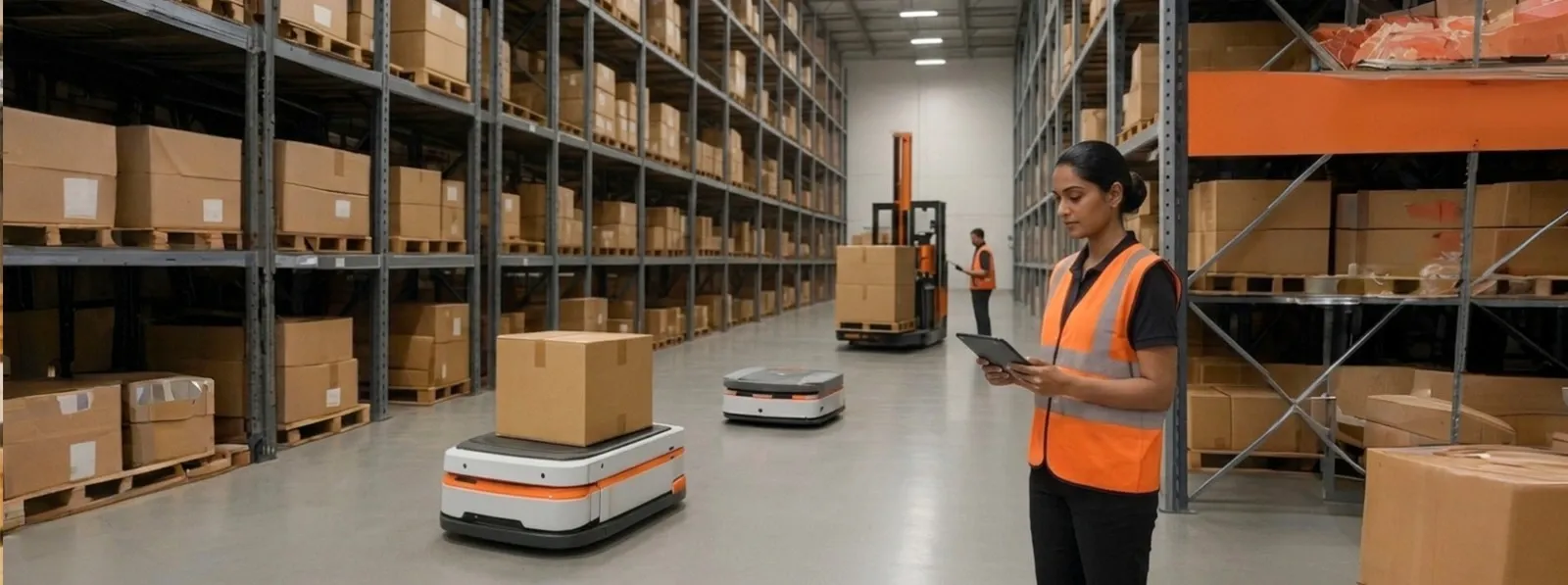
For high-volume operations, the real magic lives in multi-stop route optimization. Picture one van in a dense American city carrying 80 packages for the day. The number of possible ways to sequence those stops is astronomically large, far beyond what any dispatcher could solve before the morning coffee cools. AI cracks it in moments, then re-solves the instant a new order drops or a road closes. This is exactly why companies with AI-mature supply chains are, per Accenture's 2024 research, roughly 23% more profitable than their peers. The edge is never one dramatic win. It is thousands of small, smart decisions compounding every single day.
From Cost Center to Growth Engine
A quieter mindset shift is happening too. Logistics route optimization used to be filed under cost control. Now it drives growth. Faster and more predictable deliveries build trust, and trust builds repeat customers. The broader market reflects that pull. The AI in logistics and supply chain space was valued at $20.1 billion in 2024 and is projected to grow at a 25.9% compound annual rate through 2034, according to Global Market Insights, with North America leading adoption. Yet adoption still trails opportunity. FleetRabbit noted in 2026 that while 67% of fleet managers admit their routing is inefficient, only 38% have deployed dedicated optimization software. That gap is the real story. It is not a technology problem anymore, since the technology is proven and widely available. It is a decision problem, and the leaders are simply the ones who chose to move first while their competitors kept planning routes by hand.
Where Mobility Infotech Logistics Fits
This is the exact space Mobility Infotech Logistics was built for. Its AI-native platform generates the most efficient routes for thousands of orders across hundreds of drivers using more than 200 constraint parameters, all in a few clicks. That capability lives inside a wider TMS that stitches first mile, mid mile, warehouse management, shipment tracking, and last-mile delivery into one intelligent flow. More than 600 brands already trust the platform, and the outcomes they report are concrete. A US-based VP of Logistics at BlueHarbor Foods called switching to the TMS the best ROI decision of the year, crediting route optimization alone with cutting fuel spend and driver hours while customers embraced the live-tracking links. These are the everyday results digital transformation always promised.
What Transformation Actually Looks Like
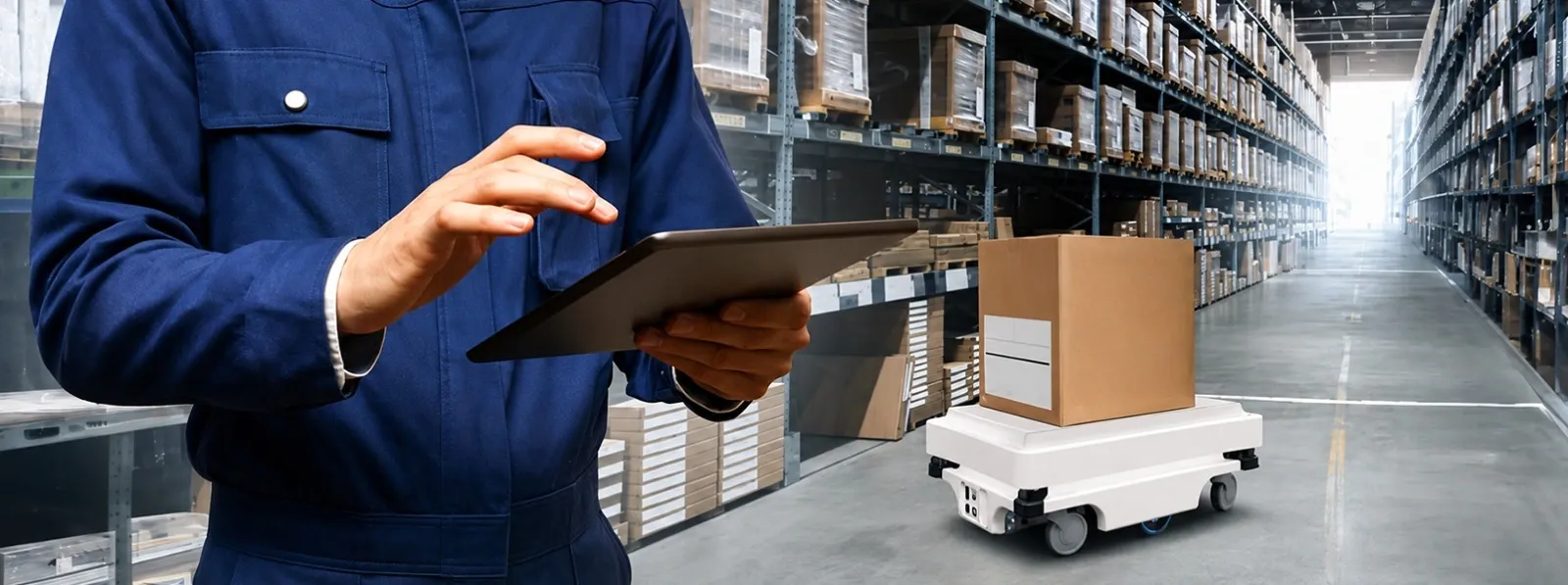
Strip away the jargon and the picture turns human. It is a driver who finishes on time and gets home for dinner. It is a customer who trusts the ETA on their phone. It is a dispatcher who plans in minutes instead of hours. The AI-driven route planning and optimization software companies leading this shift are not winning because their technology looks flashy. They are winning because they turned messy, expensive guesswork into calm, measurable precision. In a market moving this fast, precision is the whole game.
The road ahead belongs to the businesses that stop asking whether to modernize and start asking how soon. The tools are here. The numbers are proven. The only variable left is who moves next.
- content
- Introduction
- The Old Way Was Quietly Expensive
- The Math That Scales
- Where Mobility Infotech Logistics Fits
- What Transformation Actually Looks Like
Get in touch with our battle-tested sustainability, technology, and TMS specialists to explore tailored green logistics solutions.

You might also like
 Written by Jane Austen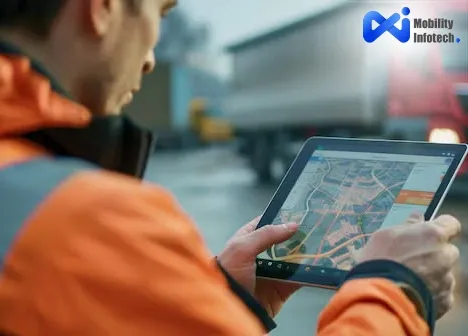
 Written by Michael S.
 Written by David Williams