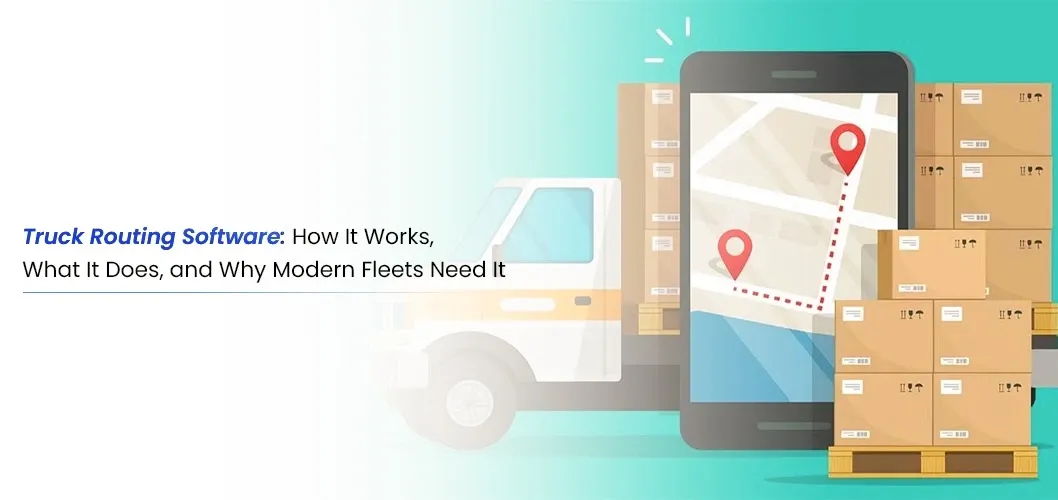
Truck Routing Software: How It Works, What It Does, and Why Modern Fleets Need It

Introduction
Picture this. A fleet manager is sitting with a printed map, a highlighter, and three phones ringing at once. That was logistics just a decade ago. Today, a single platform can plan hundreds of routes, track every truck, and reroute drivers in real time. The question is: how it all Works behind the scenes, and do you really need it?
What Is Truck Routing Software?
Truck routing software is a digital tool that plans, manages, and improves delivery routes for road-based fleets. It replaces manual planning with smart, automated decisions.
It is not just a GPS. It is a system that understands your trucks, your loads, your deadlines, and your roads. It uses all of that data to find the best possible path for every vehicle, every day.
How Does Truck Routing Software Actually Work?
The Core Technology Behind It
Modern truck routing tools rely on three main technologies working together:
- Algorithms and AI: The software uses mathematical models to calculate thousands of possible routes at once. It then picks the one that saves the most time, fuel, or cost, based on your priorities.
- Real-time data feeds: Live traffic, road closures, weather conditions, and even fuel prices are pulled into the system. Routes are adjusted on the fly when conditions change.
- GPS and telematics integration: Every truck's location, speed, and idle time are tracked. This data feeds back into the system to make future planning smarter.
What Inputs Does the Software Use?
The system does not work in isolation. It pulls together multiple data points before generating a route. These typically include:
- Delivery addresses and time windows
- Truck dimensions, weight limits, and cargo type
- Driver hours of service and rest requirements
- Road restrictions such as low bridges or weight-restricted zones
- Customer priority levels and service agreements
"Route optimization treated as a standalone function misses the strategic value unlocked when routing connects to order management, inventory visibility, carrier allocation, and customer communication." — Locus Solutions Team, logistics technology experts and authors of the Truck Route Optimization: Enterprise Guide 2026
This is exactly why platforms like Mobility Infotech Logistics integrate routing with the full supply chain, rather than treating it as a standalone tool.
What Does Truck Routing Software Actually Do?
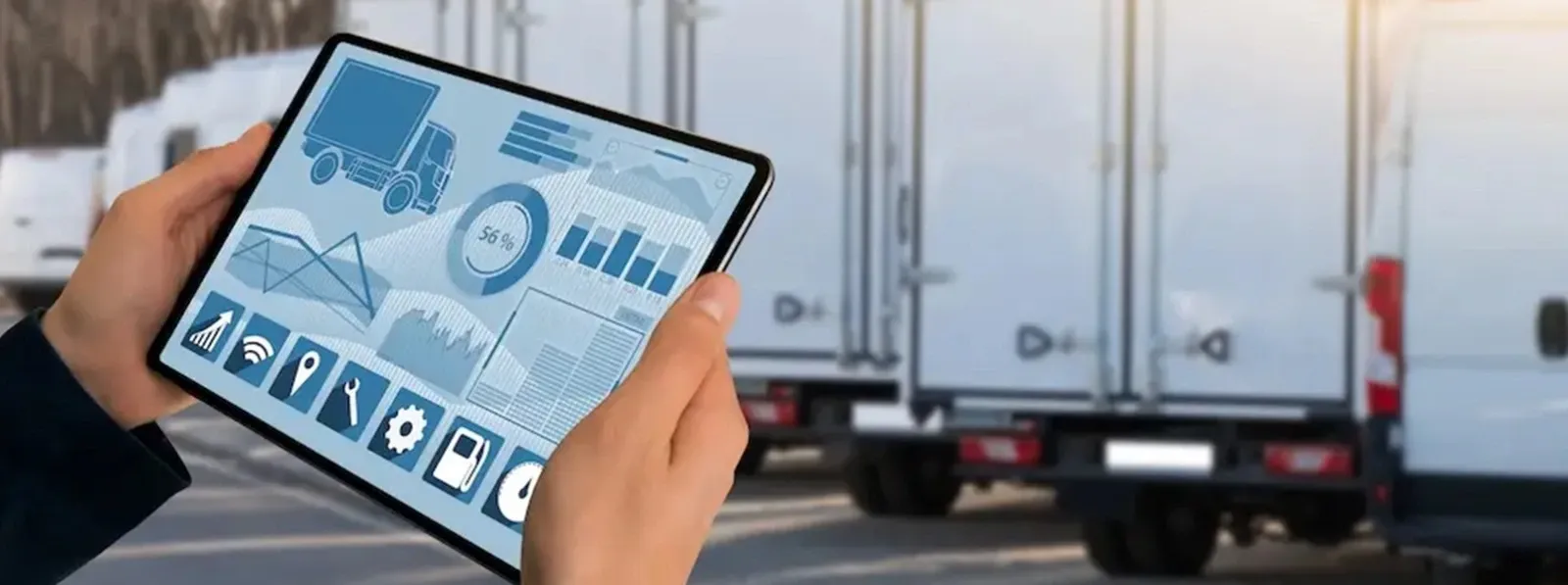
Key Functions of a Modern Routing Platform
Here is a breakdown of what a capable system handles daily:
- Multi-stop route planning: It sequences dozens or hundreds of delivery stops in the most efficient order, cutting total drive time significantly.
- Dynamic rerouting: If a driver hits an unexpected traffic jam or a road is blocked, the software recalculates and sends an updated route instantly.
- Load optimization: The system ensures trucks carry the right loads in the right order, so deliveries happen without unnecessary backtracking.
- Driver compliance checks: Hours of service regulations, rest break requirements, and local driving restrictions are automatically factored in.
- Proof of delivery and tracking: Customers and dispatchers get live updates. Drivers can capture signatures or photos directly through a connected app.
- Performance reporting: After every trip, the system generates data on fuel use, delivery times, idle periods, and driver behavior. This helps managers improve over time.
Most fleet managers underestimate how much poor routing costs them. According to the American Transportation Research Institute (ATRI), the average cost to operate a heavy-duty truck was $2.26 per mile in 2024, with fuel alone at $0.48 per mile.1 For a truck covering 100,000 miles annually, that is nearly $48,000 in fuel alone. Even a 10% improvement in routing efficiency can save close to $4,800 per truck per year in fuel costs alone.2
Why Do Modern Fleets Need Route Optimization Software?
The Problem with Manual Planning
Can a dispatcher plan good routes by hand? Technically, yes. But can they plan the best routes across 50 trucks and 300 stops, adjust in real time, and do it all in under 10 minutes? Absolutely not.
Manual planning leaves too much to chance. It does not account for traffic at 7 AM, a driver running late, or a customer who changed their delivery window at the last minute.
Route optimization software solves this by processing all of this complexity in seconds.
The Business Case Is Strong
The numbers speak clearly:
- Truck routing software cuts fuel costs by 20 to 30% for most fleets.3
- Poorly planned routes increase operational costs by 15 to 20% and risk losing high-value contracts.3
- The global route optimization software market was valued at USD 7.92 billion in 2025 and is expected to reach USD 16.78 billion by 2031, growing at a CAGR of 13.32%.4
- India's route optimization software market alone is projected to grow at a CAGR of 16.8% from 2024 to 2030, driven by the rapid expansion of e-commerce and logistics activity.5
These are not small numbers. They represent a broad shift in how logistics businesses are run.
Fleet Route Optimization Logistics: The Bigger Picture
Why "Route Planning" Is Only Part of the Story
A common mistake is thinking that routing software only finds shorter paths. That is a narrow view.
Fleet route optimization logistics is really about connecting every part of your operation. When routing data talks to your warehouse management system, your carrier network, and your customer communication tools, you get compounding gains. You do not just save fuel. You deliver faster, handle more orders, reduce driver overtime, and keep customers updated automatically.
This is the kind of connected approach that Mobility Infotech Logistics has built its platform around. Their vehicle routing optimization system uses AI-native algorithms that process over 200 constraint parameters to plan thousands of deliveries across hundreds of drivers in just a few clicks.
Who Benefits Most from Route Optimization Software for Logistics Companies?
Is this only for large enterprises? Not at all. Here is a look at who gains the most:
- Mid-size trucking companies: They benefit from structured planning without needing a large operations team. Automated dispatch saves hours every day.
- E-commerce and retail distributors: High delivery volumes and narrow time windows make manual planning nearly impossible. Route optimization software handles the complexity automatically.
- Pharma and cold chain fleets: Temperature-sensitive cargo cannot afford delays. Optimized routes reduce time on the road and help maintain compliance.
- FMCG and grocery distributors: Frequent multi-stop runs with perishable goods need tight sequencing. Smart routing ensures freshness and efficiency.
- 3PL and freight forwarders: Managing vehicles across multiple clients and locations becomes far easier with a centralized route optimization software for logistics companies.
What Should You Look for in a Routing Platform?
Features That Actually Matter
Not all routing tools are equal. When evaluating options, prioritize these capabilities:
- Real-time traffic integration: A platform that does not use live traffic data is already behind.
- Constraint-based planning: The tool must handle vehicle dimensions, driver schedules, and delivery windows simultaneously.
- TMS and ERP integration: Routing should connect to your existing systems, not sit in isolation.
- Mobile driver app: Drivers need clear, turn-by-turn instructions with proof-of-delivery tools built in.
- Analytics dashboard: Data on past trips should be easy to read and act on.
- Scalability: Whether you run 10 trucks or 1,000, the platform should grow with you.
Mobility Infotech Logistics offers all of these features, with low-code integration options that connect to SAP, Oracle, NetSuite, and other enterprise systems. Their platform is built to scale from regional fleets to multi-hub national operations.
A Closer Look: The Environmental Angle
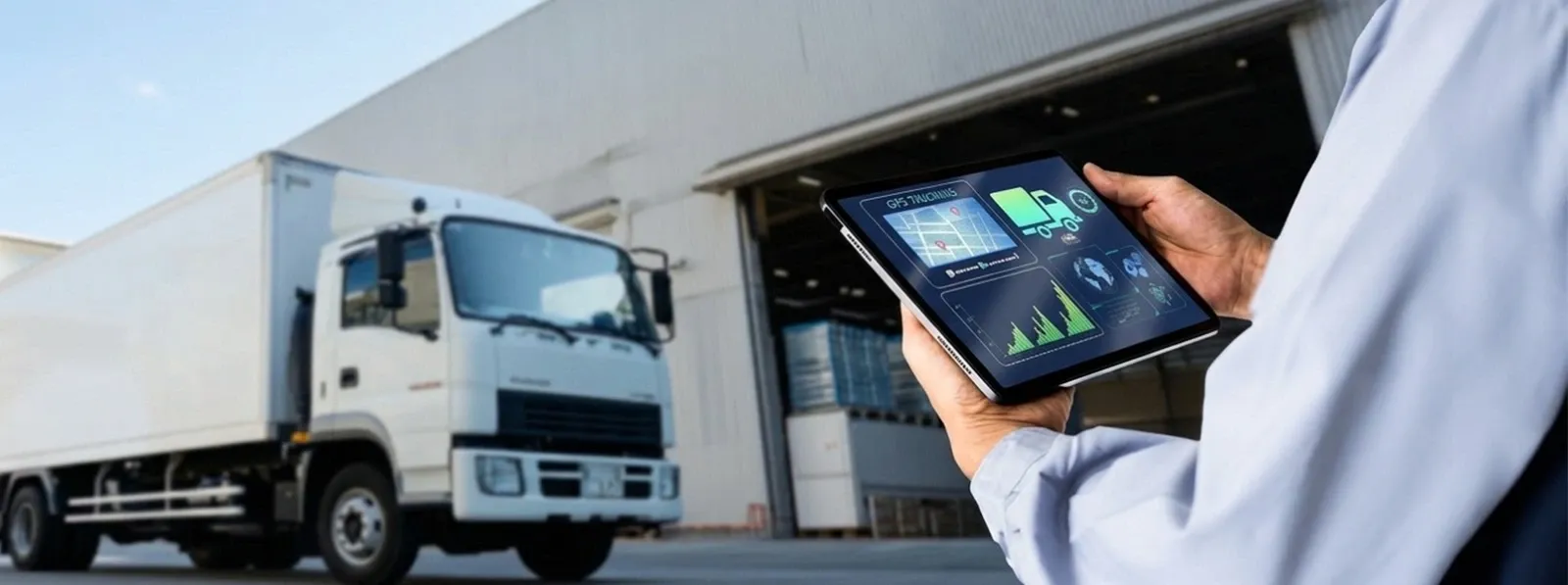
Here is something most fleet managers do not think about until they are asked directly: how much CO2 is your routing wasting?
Inefficient routes do not just burn extra fuel. They also generate unnecessary emissions. According to NACFE's 2024 Fleet Fuel Study, 14 fleets operating 75,000 trucks collectively saved $512 million in 2023 compared to average trucks on the road, simply by adopting better technologies and practices.6
Modern route optimization software contributes directly to this by cutting idle miles, reducing empty backhauls, and enabling green-fleet routing that factors in EV charging locations and lower-emission road options.
Get in touch with our battle-tested sustainability, technology, and TMS specialists to explore tailored green logistics solutions.

You might also like
 Written by Jane Austen
 Written by Michael S.
 Written by David Williams