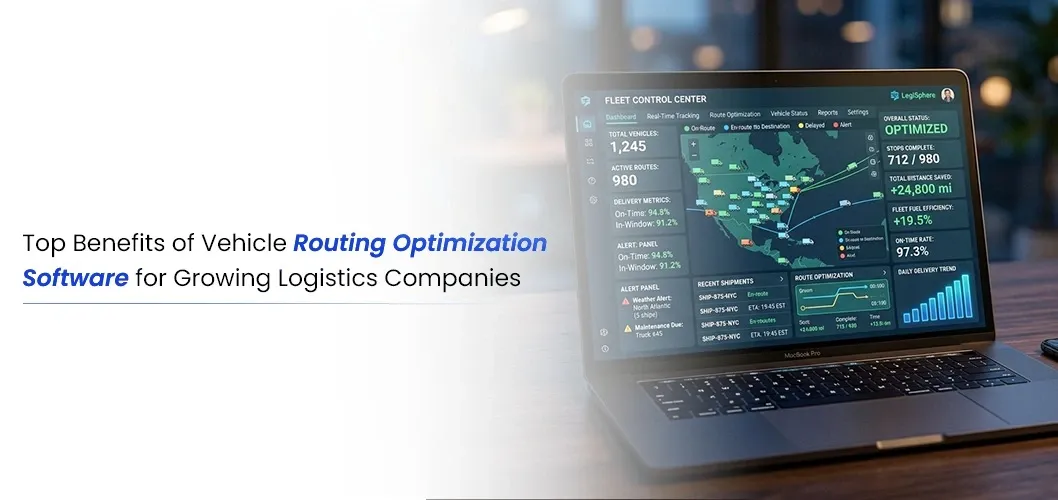
Top Benefits of Vehicle Routing Optimization Software for Growing Logistics Companies

Introduction
There is a moment every growing logistics company hits. The spreadsheet that used to work fine for planning routes suddenly cannot keep up. More vehicles, more drivers, more delivery zones, and somehow the whole operation starts feeling slower instead of faster. If that sounds familiar, it might be time to look seriously at vehicle routing optimization system technology.
Growth is a good problem to have, but it exposes cracks in processes that used to be invisible. Manual planning that worked with five vehicles starts to fall apart with twenty, and by the time a company hits fifty vehicles, the inefficiencies are no longer small annoyances. They are real money leaking out of the business every single day.
Why Growing Fleets Feel the Pain First
Small fleets can survive on instinct and local knowledge. A planner who has been doing the job for years might genuinely know the fastest way across town at rush hour. But that knowledge does not scale. Add ten more vehicles, three new delivery zones, and a handful of new drivers who do not know the shortcuts, and the whole system starts to wobble.
This is exactly where logistics route optimization earns its place. Instead of relying on one person's memory, the software applies the same intelligent logic across every route, every driver, and every zone, regardless of how much the fleet has grown.
Benefit One: Real Fuel Savings That Add Up Fast
Fuel is usually the single largest variable cost in any logistics operation. Even a small reduction in wasted mileage translates into meaningful savings once you multiply it across dozens of vehicles and hundreds of delivery days in a year.
Optimized routes cut out the unnecessary backtracking and inefficient sequencing that manual planning almost always includes. Drivers travel shorter distances to complete the same number of stops, and that difference shows up clearly on the monthly fuel bill.
Benefit Two: More Deliveries Without More Vehicles
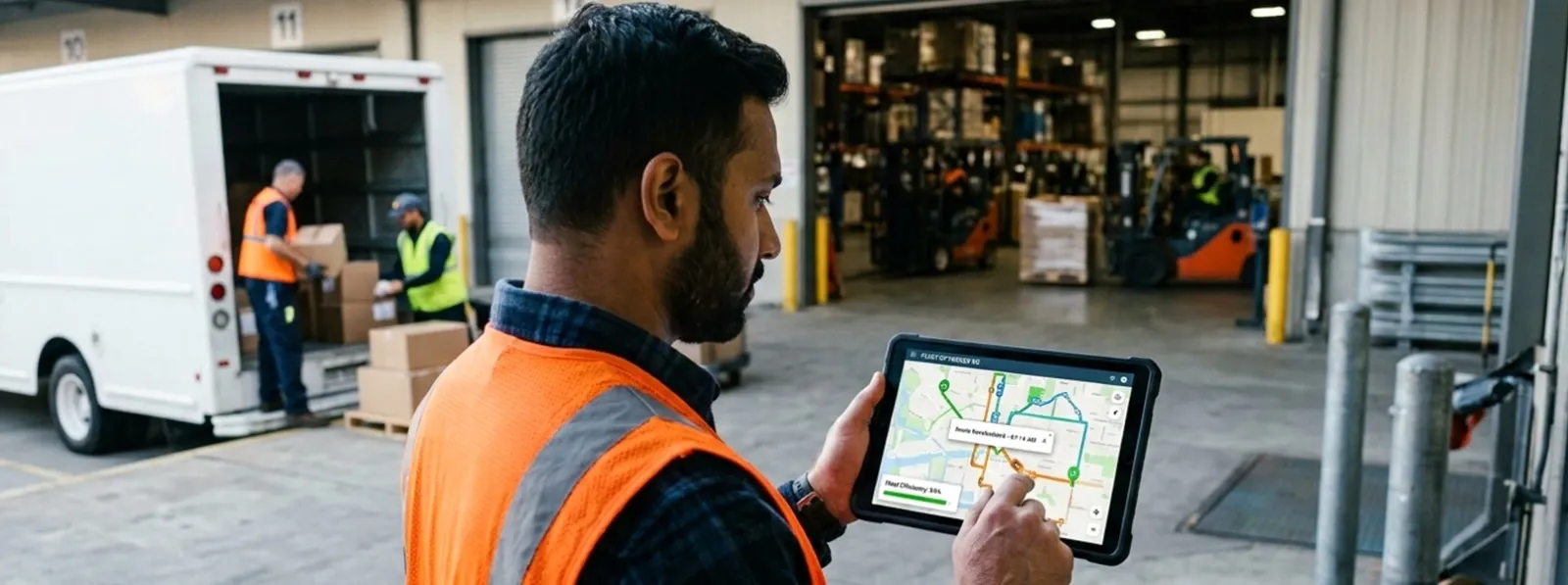
One of the most attractive parts of delivery routing and scheduling software is how it lets a business do more with what it already has. Instead of buying five new vehicles to handle growing order volume, a company might find that better routing alone increases capacity enough to delay that investment, sometimes by months or even years.
This matters a great deal for growing businesses that need to manage cash flow carefully. Every vehicle purchase comes with insurance, maintenance, and driver hiring costs attached. Squeezing more efficiency out of the existing fleet is often the smarter first move before scaling up the number of vehicles.
How This Plays Out in Practice
Picture a fleet that used to complete eighty deliveries a day with fifteen vehicles. After introducing route optimization, the same fifteen vehicles start completing ninety-five to a hundred deliveries in the same working hours, simply because routes are tighter and less time is wasted between stops.
Benefit Three: Happier Drivers and Lower Turnover
Driver retention is a quiet but serious challenge in logistics. Long, poorly planned routes lead to frustration, late finishes, and burnout. When routes are optimized, drivers spend less time stuck in avoidable traffic and more time actually completing their work, which makes the job feel far less exhausting.
A driver who consistently finishes their shift on time is far more likely to stay with a company than one who is constantly running late through no fault of their own. In an industry where hiring and training new drivers is expensive and time consuming, this benefit alone can justify the investment in optimization software.
Benefit Four: Better Customer Experience
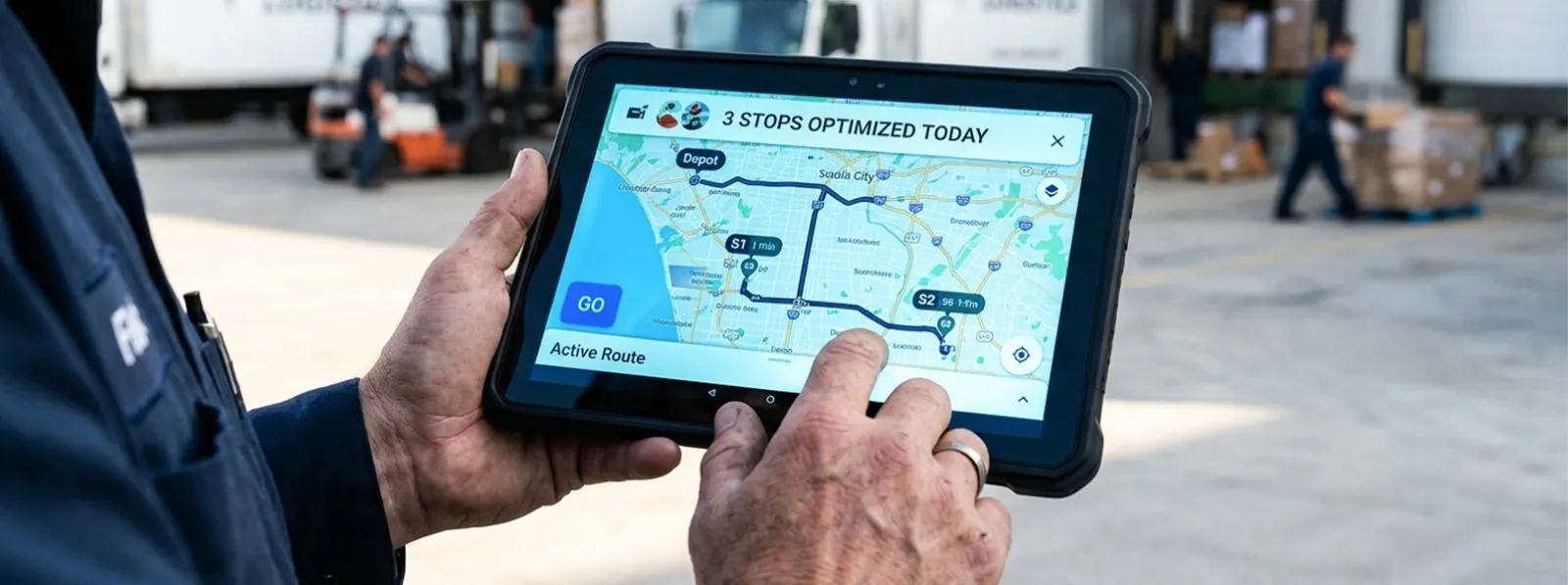
Customers today expect accurate delivery windows, and they notice when a company consistently misses them. Vehicle routing optimization system tools help businesses set realistic delivery estimates in the first place, because the routes are calculated based on actual conditions rather than rough guesses.
Reliable delivery windows build trust, and trust translates directly into repeat business. This is especially true for companies serving business clients, where missed deliveries can disrupt an entire operation on the receiving end.
How Mobility Infotech Logistics Supports This Shift
Mobility Infotech Logistics works with growing fleets that are exactly at this turning point, where manual methods no longer make sense but the company is not yet sure which technology investment makes the most sense. The most common pattern seen across these businesses is that once optimized routing is introduced, teams wonder why they waited so long to make the switch.
The transition does not need to happen overnight. Many companies start with a portion of their fleet, measure the improvement, and then expand once the numbers prove themselves out.
Benefit Five: Data That Actually Helps Decision Making
Beyond the day-to-day efficiency gains, route optimization software generates a steady stream of useful data. Which zones consistently take longer than expected? Which time slots see the most delivery delays? Which drivers or routes need extra attention?
This kind of visibility is nearly impossible to get from manual planning. With data-backed insights, managers can make smarter decisions about hiring, zone planning, and even where to open new warehouses or hubs as the business continues to expand.
Choosing the Right Time to Make the Switch
Not every business needs to adopt optimization software on day one, but there are clear signs it is time. If dispatch planning is taking longer each week, if fuel costs feel disproportionate to delivery volume, or if customer complaints about missed windows are becoming more frequent, those are all signals worth paying attention to.
Waiting too long usually means the inefficiencies have already become baked into daily operations, making the eventual transition feel more disruptive than it needs to be. Acting early, while the fleet is still manageable, tends to make the whole process smoother.
It is also worth talking to drivers before rolling out any new system fleet-wide. They are usually the first to notice small inefficiencies, like a delivery zone that always runs late or a stretch of road that is best avoided during certain hours. Bringing that ground-level insight into the rollout plan helps the transition feel collaborative rather than something imposed from the top down.
Setting Realistic Expectations
It is worth being honest that optimization software is not magic. It will not fix a fundamentally broken delivery process or make up for warehouses that are poorly located. What it does is remove the guesswork from the parts of the operation that can genuinely be improved through smarter planning, which for most growing logistics companies is a significant portion of their daily cost and effort.
Get in touch with our battle-tested sustainability, technology, and TMS specialists to explore tailored green logistics solutions.

You might also like
 Written by Jane Austen
 Written by Michael S.
 Written by David Williams