
Machine Learning in Route Optimization: What Businesses Need to Know

Introduction
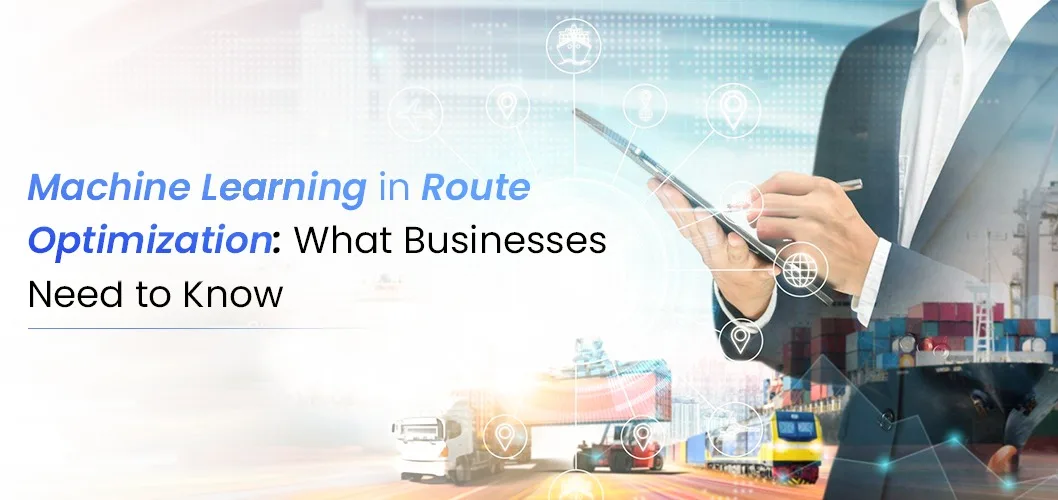
The logistics landscape in the United States is undergoing a massive shift. As of 2024, the American Trucking Associations (ATA) reported that trucks moved over 11 billion tons of freight, accounting for nearly 80% of the nation's total freight bill. For companies like Mobility Infotech Logistics, staying competitive in this high-stakes environment means moving beyond simple maps. The secret weapon for modern fleets is machine learning applied to Route Optimization.
In a world where consumer expectations for speed have never been higher, businesses must find ways to reduce waste. According to the U.S. Bureau of Transportation Statistics (BTS), the Truck Travel Time Reliability (TTTR) index is a key metric the government tracks to ensure the economy keeps moving. When your trucks are stuck in traffic, your reliability index drops and your costs soar. Forward-thinking logistics managers know machine learning offers a way to predict these hurdles before they happen.
The High Cost of Inefficiency in the USA
Operating a fleet in the USA is getting more expensive. Recent data from the American Transportation Research Institute (ATRI) shows that the marginal cost of operating a truck has risen significantly, with fuel and driver wages being the largest factors. Furthermore, the U.S. Department of Transportation (DOT) has set a target to maintain freight reliability through 2026, recognizing that congestion is a multi-billion-dollar drain on the GDP.
Many businesses still rely on static planning. This is like trying to predict the weather by looking at a photo from last year. It doesn't work because the roads are alive. Accidents, construction, and seasonal surges change the "perfect" path every hour. Without real-time route optimization, a business is essentially driving blindfolded into a traffic jam.
How Real-Time Route Optimization Saves the Day
The primary advantage of machine learning is its ability to process live data. This is not just a GPS that tells you to turn left. It is a system that talks to thousands of data points at once. Real-time route optimization allows a fleet to react to the world as it changes.
The Environmental Protection Agency (EPA), through its SmartWay program, has highlighted that route optimization tools can help a driver reduce travel by approximately 2,500 miles per year. This is equivalent to saving 3 metric tons of carbon dioxide per vehicle. When a crash occurs on I-95 or a blizzard hits the Midwest, the machine learning model calculates a new path instantly. This ensures that the "Truck Travel Time Reliability" remains high, keeping your business in line with federal performance goals.
The Complexity of Multi-Stop Route Optimization
For many logistics providers, the challenge is not getting from one city to another, but making 30 stops within a single zip code. This is where multi-stop route optimization becomes vital. Every stop added to a route increases the math complexity by a factor of ten. A human brain cannot calculate the best sequence for 20 stops while considering:
- Customer delivery windows.
- Vehicle weight limits.
- Driver Hours of Service (HOS) regulations from the FMCSA.
- Specific loading dock wait times.
Machine learning models learn the "personality" of every stop. If a certain grocery store in downtown Chicago always takes an hour to unload on Friday mornings, the system will adjust the entire day's schedule to compensate. This level of detail is why the EPA reports that companies using these technologies can see a 10% to 30% return on investment (ROI) almost immediately.
Measuring Success with Government-Backed Data
The U.S. government tracks logistics performance very closely. The DOT’s Annual Performance Plan for 2026 emphasizes the need for "reliable freight movement." By using Route Optimization, your business contributes to these national goals while boosting your own bottom line.
By reducing the miles driven, you are not just saving gas. You are also reducing the $30 billion in federal and state fuel taxes paid by the industry annually by ensuring every gallon burned is used as efficiently as possible.
The Environmental Impact of Smarter Routing
Sustainability is no longer a buzzword; it is a regulatory requirement. The EPA SmartWay program has helped its partners save over $55 billion in fuel costs since 2004. For a business in 2026, being "SmartWay certified" is a badge of honor that attracts big-name shippers.
Route Optimization is the easiest way to go green. Fewer miles mean fewer emissions. Machine learning helps identify "empty miles"—when a truck is driving without a load—and eliminates them. This efficiency is exactly what the World Bank looks for in its Logistics Performance Index (LPI), where the USA strives to remain a global leader in infrastructure and tracking capabilities.

The Future of Mobility Infotech Logistics
- At Mobility Infotech Logistics, we believe that data should work for you, not the other way around. Our approach to real-time route optimization is built to handle the unique stresses of the American road. Whether you are managing a fleet of five vans or five hundred semi-trucks, the math remains the same: efficiency equals profit.
The transition to AI-driven logistics is happening now. As the ATA forecasts trucking revenues to grow to $1.46 trillion by 2035, the companies that adopt multi-stop route optimization today will be the ones leading the market tomorrow.

- content
- Introduction
- The High Cost of Inefficiency in the USA
- The Future of Mobility Infotech Logistic...
Get in touch with our battle-tested sustainability, technology, and TMS specialists to explore tailored green logistics solutions.

You might also like
 Written by Jane Austen
 Written by Michael S.
 Written by David Williams