
How AI Route Optimization Is Transforming First-Mile Logistics in India

Introduction
First Mile Logistics Route Planning in India doesn't get nearly as much attention as last mile, which is a bit odd when you think about it, because if the first mile is a mess, everything downstream inherits that mess. A pickup that gets delayed at a seller's warehouse in Surat ends up throwing off the mid mile schedule, which then throws off the last mile delivery promise made to a customer in Pune. It's one long chain, and the first link matters more than people give it credit for.
India's logistics sector has been under real pressure to tighten up, especially with the government's own target to bring logistics costs down from the historic 13-14 percent of GDP toward single digits by the end of this year. A lot of that saving has to come from smarter first mile operations, not just flashy last mile innovations.
Why First Mile Has Been the Weak Link
Traditionally, first mile pickup scheduling in India has relied on rough estimates and seller availability windows that don't always sync up well with fleet capacity. A pickup agent might visit five sellers in a scattered, inefficient order because the route was planned around convenience rather than actual geography and time windows. Multiply that across thousands of daily pickups and you get a genuinely significant amount of wasted time and fuel.
What First Mile Route Optimization Software Actually Does
First mile route optimization software takes the guesswork out of this. Instead of a pickup agent working through a rough mental map, the system calculates the most efficient sequence based on seller locations, pickup time windows, vehicle capacity, and real time traffic conditions across Indian cities, which, let's be honest, can be wildly unpredictable depending on the hour.
The result is fewer missed pickup windows, less time spent circling back to sellers who were skipped in an inefficient sequence, and tighter handoffs into the mid mile network. When the first mile runs on time, everything after it has a much better chance of running on time too.
Route Optimization for First Mile Delivery in Practice
Good route optimization for first mile delivery doesn't just optimize for distance. It factors in seller-specific pickup windows, which vary a lot across quick commerce sellers, retail sellers, and manufacturing units. A grocery seller might need pickup within a tight morning window before stock turns over, while a manufacturing client might have more flexible dock scheduling. Smart routing respects those differences instead of treating every pickup the same.
How AI Actually Improves on Rule-Based Routing
Rule-based routing follows fixed logic. AI-driven route optimization goes further by learning from historical pickup patterns, actual travel times versus estimated ones, and recurring bottlenecks specific to a city or region. Over time, the system gets better at predicting which routes will actually work smoothly versus which ones look good on paper but consistently run late because of a specific traffic chokepoint the static plan never accounted for.
This matters a lot in Indian cities where traffic patterns can be genuinely chaotic and vary dramatically by time of day, festival season, or even local events. A system that learns and adapts outperforms one that just calculates the shortest path once and calls it done.
The Bigger Picture for India's Logistics Costs
India's last mile delivery market is projected to keep growing at a strong pace over the next several years, and first mile efficiency is quietly one of the biggest levers for keeping overall logistics costs down as that growth happens. Some operators using optimized pickup networks have already seen meaningful cost reductions, and first mile route optimization is a big part of how that gets achieved at scale.
How Mobility Infotech Logistics Approaches First Mile
Mobility Infotech Logistics builds first mile route optimization as a core part of our platform, not an afterthought bolted onto last mile tools. Our system factors in seller pickup windows, vehicle capacity, and live traffic conditions across Indian cities to build pickup sequences that actually hold up during execution, not just on a planning screen.
It connects directly with our broader TMS and WMS integrations too, so first mile pickup data flows straight into mid mile and last mile planning without manual handoffs or delays between systems that don't talk to each other.
Quick Commerce Is Raising the Bar for Everyone
It's hard to talk about Indian logistics right now without mentioning quick commerce, because the ten and fifteen minute delivery promises coming out of that space have quietly reset customer expectations across the board. First mile pickup timing has to be near instant for quick commerce to work at all, and that pressure is spilling over into how sellers and logistics partners think about pickup efficiency more broadly, even outside the quick commerce category itself.
Sellers who've experienced fast, reliable pickup through a quick commerce integration start expecting the same reliability from their other logistics partners too. That's raising the baseline for what "good" first mile service actually looks like across the industry, and operators still relying on manual scheduling are increasingly finding themselves at a real competitive disadvantage.
Getting Started With First Mile Optimization
If your first mile operation is still running on manual scheduling or basic rule-based routing, start by looking at where pickup delays are actually concentrated, specific sellers, specific zones, specific times of day, and layer optimization onto those pain points first. The improvement tends to be visible quickly, which makes the case for broader rollout much easier.
What to Watch Out For During Rollout
A quick word of caution here, because it's easy to assume software alone solves everything. Pickup agents on the ground still need to trust the sequence the system gives them, and that trust builds over weeks, not days. Expect some initial pushback, especially from experienced agents who've built up years of informal local knowledge about which sellers are reliable and which routes tend to hit traffic. Give the system time to prove itself against that experience rather than expecting instant buy-in on day one.
Get in touch with our battle-tested sustainability, technology, and TMS specialists to explore tailored green logistics solutions.

You might also like
 Written by Jane Austen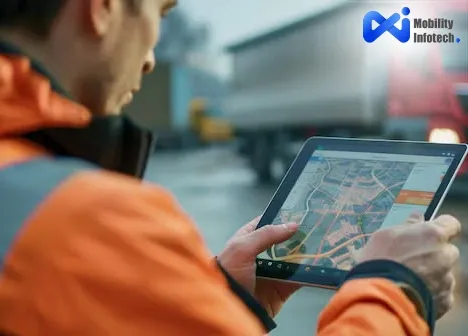
 Written by Michael S.
 Written by David Williams