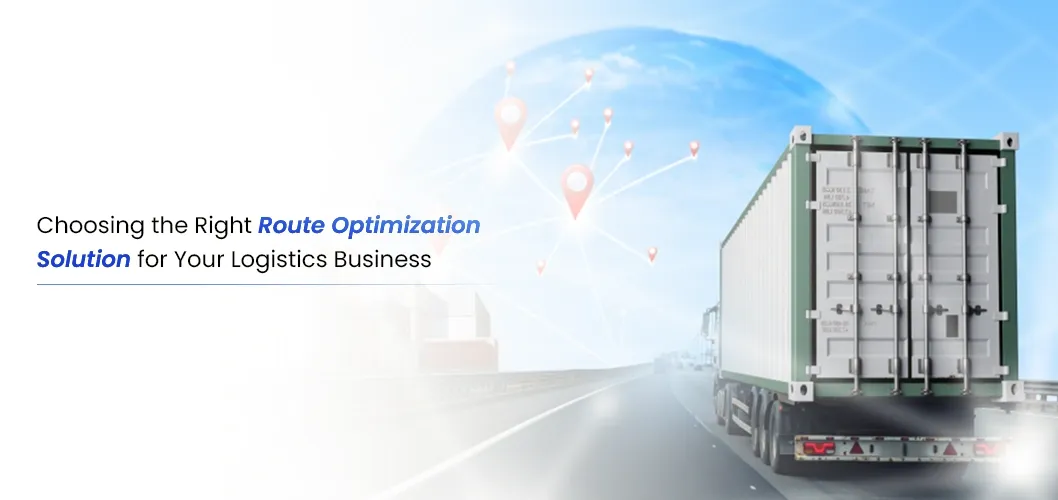
Choosing the Right Route Optimization Solution for Your Logistics Business

Introduction
America’s Logistics Industry Has a Problem. Actually, Several.
A truck leaves Dallas at 6:15 AM.
By noon, traffic outside Houston adds 47 unexpected minutes. Fuel prices jump again. A customer starts calling because the shipment tracker has not updated since the morning. The dispatcher is buried in spreadsheets. The driver is frustrated. Another delay. Another apology email. Another hit to profit margins.
Sound familiar?
This is not rare in the American logistics industry. It is daily life.
The pressure has become relentless. Delivery expectations keep accelerating while operating costs refuse to slow down. According to the American Transportation Research Institute, fuel costs alone accounted for nearly 28% of total trucking expenses in recent years, making it one of the biggest financial burdens for fleet operators in the USA. At the same time, the U.S. Bureau of Transportation Statistics reports that freight volumes are expected to continue climbing sharply over the next decade.
More shipments. More pressure. More complexity.
Yet many logistics companies are still relying on outdated routing methods that simply cannot keep pace with modern demand.
That is where a powerful route optimization solution stops being “nice to have” and starts becoming business-critical.
Not someday. Today.
Logistics in the USA Is Moving Faster Than Most Businesses Can Handle
The logistics industry has changed dramatically over the last few years. Customers now expect same-day updates, accurate ETAs, live tracking, and zero excuses. Amazon changed expectations forever, and now every transportation business is being measured against that standard, whether it is fair or not.
Here is the issue.
Most fleets are fighting modern logistics battles with yesterday’s tools.
Manual route planning still exists in surprising numbers across the USA. Dispatchers often spend hours adjusting schedules manually because weather changes, traffic congestion, driver availability, and delivery windows constantly shift throughout the day.
And those inefficiencies are expensive.
According to McKinsey research, logistics companies can reduce transportation costs by up to 15% through advanced route optimization and smarter operational visibility. That is not a tiny improvement. For larger fleets, it can mean millions saved annually.
Even small routing mistakes create chain reactions:
- Delayed deliveries
- Excess fuel consumption
- Driver overtime costs
- Customer dissatisfaction
- Increased maintenance expenses
One wrong route does not stay one wrong route for long.
The Hidden Costs Most Fleet Owners Never Notice
This part stings a little.
Many logistics businesses only calculate visible expenses. Fuel. Payroll. Maintenance. Insurance. But the real operational damage often hides inside inefficient workflows nobody notices until profits begin shrinking.
Think about this.
If a fleet of 80 trucks wastes just 12 unnecessary miles per vehicle each day, that adds up to more than 350,000 wasted miles annually. That means more fuel burned, more tire wear, more maintenance downtime, and more driver fatigue.
Quiet losses. Constant losses.
The American Trucking Associations also estimates that the trucking industry continues to struggle with a severe driver shortage, one that could exceed 160,000 drivers by 2030 if conditions do not improve.
Drivers are exhausted.
Poor route planning contributes heavily to that exhaustion. Long idle times, chaotic schedules, unrealistic dispatching, and constant rerouting create frustration that pushes experienced drivers out of the industry entirely.
That is why modern businesses are investing aggressively in advanced logistics management software that simplifies operations instead of creating more confusion.
Because retention matters now more than ever.

What a Smart Route Optimization Solution Actually Does
A lot of software companies throw around buzzwords. AI. Automation. Visibility. Optimization.
Fine. But what does that actually mean for a logistics business operating in the real world?
A strong route optimization solution does not just create shorter routes. It creates smarter operations from top to bottom.
Real-Time Route Adjustments
Traffic conditions in cities like Chicago, Atlanta, and Los Angeles can change in minutes. Construction zones appear overnight. Storm systems disrupt schedules unexpectedly.
Modern routing technology adapts instantly. It recalculates routes dynamically instead of forcing dispatchers to manually troubleshoot every delay.
That responsiveness saves money fast.
Better Fuel Efficiency
Fuel volatility has become brutal across the USA transportation market. Even small improvements in mileage efficiency can dramatically impact operating margins.
Intelligent route optimization reduces idle time, avoids unnecessary detours, and helps drivers complete deliveries with fewer wasted miles.
Simple idea. Massive impact.
Improved Driver Productivity
Drivers perform better when schedules actually make sense.
Nobody enjoys impossible delivery timelines or chaotic dispatch instructions. Smarter routing creates more balanced workloads, clearer delivery sequencing, and fewer last-minute disruptions.
That directly improves retention.
Stronger Customer Experience
Customers do not just want deliveries anymore. They want visibility.
They expect live updates. Predictable ETAs. Transparent communication. A reliable transport management software solutions platform helps logistics businesses provide exactly that without overwhelming dispatch teams.
Why Mobility Infotech Logistics Makes Sense for American Logistics Businesses
Here is the truth.
Many software providers build generic systems and simply label them “logistics platforms.” The result? Complicated dashboards filled with features businesses rarely use while core transportation problems remain unsolved.
Mobility Infotech Logistics takes a different approach.
Their platform is built around real operational pain points faced by transportation and logistics companies across the USA. Rising fuel costs. Delivery delays. Poor fleet visibility. Manual dispatch inefficiencies. Driver coordination issues.
Problems that cost real money every single day.
Mobility Infotech Logistics delivers an intelligent, scalable route optimization solution technology that helps businesses reduce operational waste while improving delivery performance and customer satisfaction simultaneously.
That balance matters.
Because cutting costs means very little if customer experience collapses in the process.

How Mobility Infotech Logistics Solves Real Industry Problems
The logistics industry does not need more complexity. It needs clarity.
Mobility Infotech Logistics focuses heavily on operational visibility and automation that actually improves day-to-day performance.
Smarter Fleet Visibility
Fleet managers need real-time oversight now more than ever. Mobility Infotech Logistics helps businesses track vehicles, monitor route progress, and respond quickly to delays before they become larger operational problems.
That kind of visibility creates control.
Reduced Manual Work
Dispatch teams already operate under enormous pressure. Automating route planning and scheduling through advanced logistics management software dramatically reduces repetitive manual tasks and minimizes costly human error.
Fewer spreadsheets. Fewer headaches.
Faster Deliveries
Customers remember late shipments.
Mobility Infotech Logistics helps businesses optimize delivery sequencing and route efficiency, allowing fleets to improve delivery timelines while reducing unnecessary mileage across operations.
Scalable Operations
Growth should feel exciting. Not chaotic.
The company’s transport management software solutions are designed to support expanding logistics operations without forcing businesses to completely rebuild workflows every time fleet sizes increase.
That scalability becomes crucial for long-term growth.
The Future of Logistics Will Belong to Faster, Smarter Operators
The logistics industry is entering a serious technology shift across the United States.
Artificial intelligence, predictive analytics, automation, and real-time operational visibility are no longer reserved for enterprise giants with unlimited budgets. Mid-sized fleets are adopting these technologies rapidly because staying competitive now depends on operational precision.
And honestly, customers can tell the difference.
Businesses that modernize routing operations now will gain stronger margins, faster deliveries, better driver retention, and improved customer loyalty. Businesses that delay modernization will continue fighting rising costs with outdated systems that create inefficiency at every level.
That gap is only getting wider.
A modern route optimization solution is no longer just about navigation. It is about profitability, scalability, operational control, and customer trust.
Everything connects back to efficiency.
And efficiency wins.
Get in touch with our battle-tested sustainability, technology, and TMS specialists to explore tailored green logistics solutions.

You might also like
 Written by Jane Austen
 Written by Michael S.
 Written by David Williams